
The Shoe Dilemma: The Definitive Guide on Exactly What Footwear Matches Every Midi Length
By Fashiorial
On Tuesday, it happens at 7:45 AM. You have the best modest midi dress. It’s a soft oatmeal-colored ribbed knit with a high neck and long sleeves. You put it on and feel classy and at ease. You feel ready to take on the boardroom or the lunch with a client.
After that, you look down.
You put on your favorite ankle boots. Your legs look six inches shorter all of a sudden. You trade them in for strappy sandals, but now the outfit feels off-balance, top-heavy, and hard to figure out. You put on sneakers, and you look like a commuter who forgot to change shoes.
You stand in front of the mirror, the clock ticking, feeling very frustrated with your clothes. The dress is just right. The shoes are just right. But together? They’re a mess.
This is the problem with shoes.
The midi dress is the clear winner when it comes to modest clothing. It covers you up without dragging on the floor, and it’s professional enough for work and stylish enough for dinner. But it costs a lot of money, and it’s the hardest hemline to style geometrically.
Why? This is because the midi hem goes across the widest part of your calf. It makes a line that runs across your leg where it naturally gets thicker. Not only do you lose style points if you wear this with the wrong shoe, but you also lose height. You make things look “stumpy” when they should be elegant.
We don’t guess at Fashiorial. We do math. Physics is styling. It has to do with lines, proportions, and the Golden Ratio.
This is the only shoe guide you’ll ever need.

Part 1: The Physics of the Leg Line (The Theory)
We need to know about anatomy before we buy shoes. The goal of wearing a midi dress, especially for a woman who wants to cover her arms and neckline, is to keep a sense of verticality. We want the eye to move up and down smoothly, not get stuck on blocks that are horizontal.
The “Visual Cut” Phenomenon
Every time you put a horizontal line on your body, the eye stops there.
- The Hemline: This is your first horizontal line (mid-calf).
- The Shoe Strap: If you wear a shoe with an ankle strap, you create a second horizontal line.
The Danger Zone: The space between the hemline and the ankle strap. If you have a midi dress ending at the calf and a bootie cutting off at the ankle, you are left with a 4-inch strip of skin (or sock). This visually isolates your calf, making it look like a floating block.
The “Low Vamp” Secret
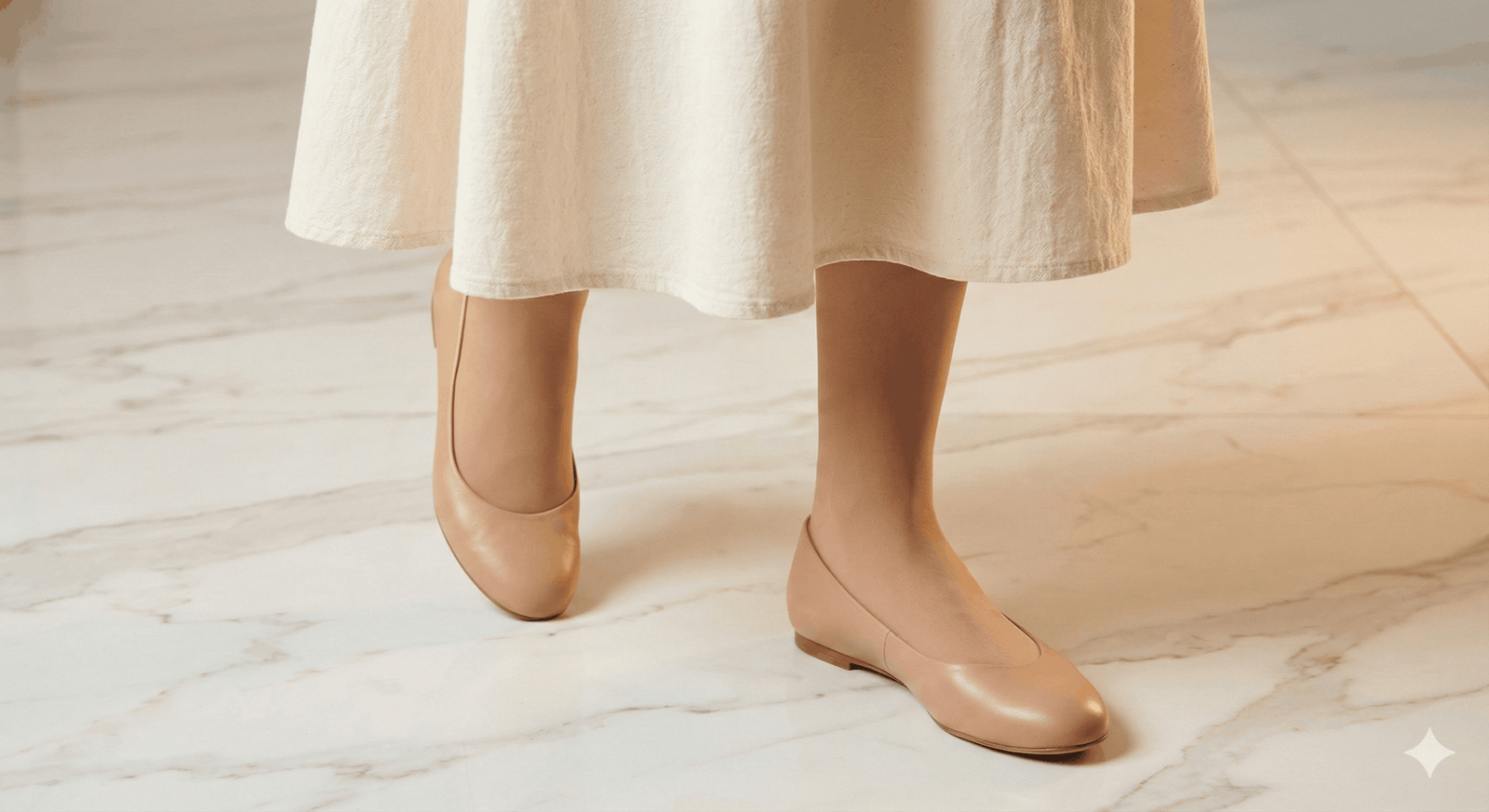
If you remember nothing else from this article, remember the Vamp. The “vamp” is the part of the shoe that covers the top of your foot and toes.
- Low Vamp: Covers only the toes (e.g., a ballet flat or pump). This extends the leg line because the skin of the foot is visually connected to the leg.
- High Vamp: Covers the entire foot up to the ankle (e.g., a loafer, sneaker, or bootie). This shortens the leg line.
The Golden Rule: The longer the dress, the lower the vamp should be (usually). If the dress covers more leg, you need to show more foot to balance the proportion.
Part 2: The Midi Dictionary – Know Your Length
Not all “midis” are created equal. To pick the right shoe, you must diagnose your specific hemline.
1. The “Just-Below-Knee” Midi
- Length: Hits exactly at the top of the calf muscle.
- The Vibe: 1950s secretary, retro, strictly professional.
- The Risk: Can look dated or “frumpy” if paired with round-toe shoes.
2. The “True Midi” (Mid-Calf)
- Length: Hits the widest part of the calf.
- The Vibe: The most common modern length. Fashion-forward.
- The Risk: The “Cankle” effect. This is the hardest length to style because it maximizes the width of the leg.
3. The “Tea Length” (Lower Calf)
- Length: Hits about 3-4 inches above the ankle bone.
- The Vibe: Elegant, evening-ready, very modest.
- The Risk: Looking like you are wearing a maxi dress that shrank in the wash.
Part 3: The Prescriptive Guide – Shoe by Shoe
Here is the breakdown. We are not just suggesting; we are prescribing.
Category A: The Loafer & The Mule (The Professional’s Choice)
For the working millennial, the heel is often impractical, but the sneaker is too casual. Enter the loafer.
The Rules:
- DO wear a Chunky Loafer with a ribbed knit midi. The “heaviness” of the shoe balances the texture of the knit. It grounds the look.
- DON’T wear a delicate, thin-soled loafer with a voluminous A-line midi. The dress will swallow your feet, and you will look like you have tiny hooves. Volume needs volume.
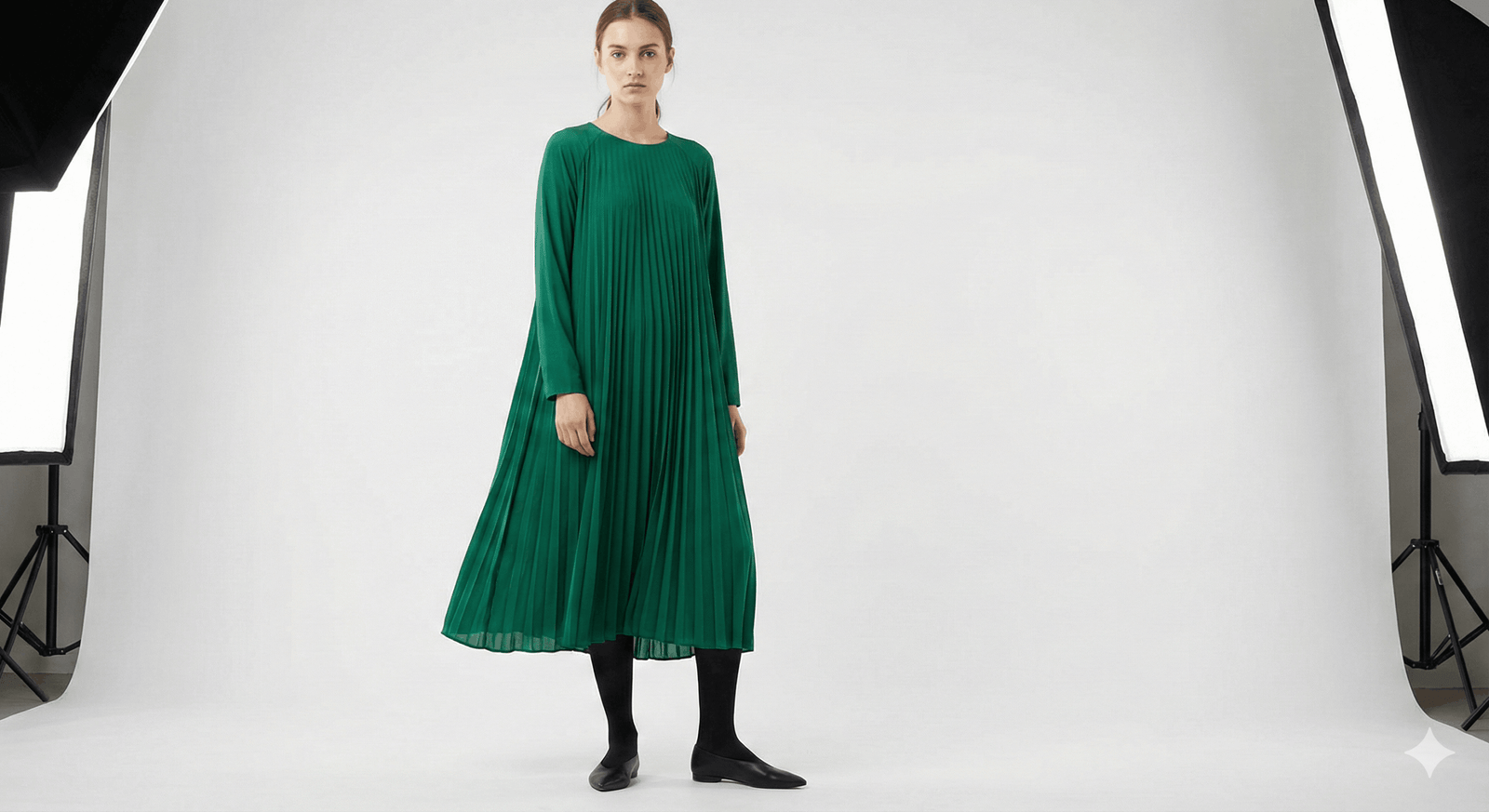
- THE SECRET WEAPON: The Backless Mule. A pointed-toe flat mule is the ultimate hack for midi dresses. Because the back is open, it shows the heel, which tricks the eye into seeing more leg length, even though the shoe is flat.
The Modest Angle: If you are wearing a mule in winter, pair it with sheer nude stockings. Do not wear chunky socks with backless mules and a midi dress unless you are deliberately going for an eccentric “Man Repeller” aesthetic (which is valid, but advanced).

Category B: The Boot Dilemma (Ankle vs. Knee)
This is where 90% of mistakes happen.
1. The Ankle Bootie (The Enemy?)
We love ankle boots with jeans. But with midi dresses? They are dangerous.
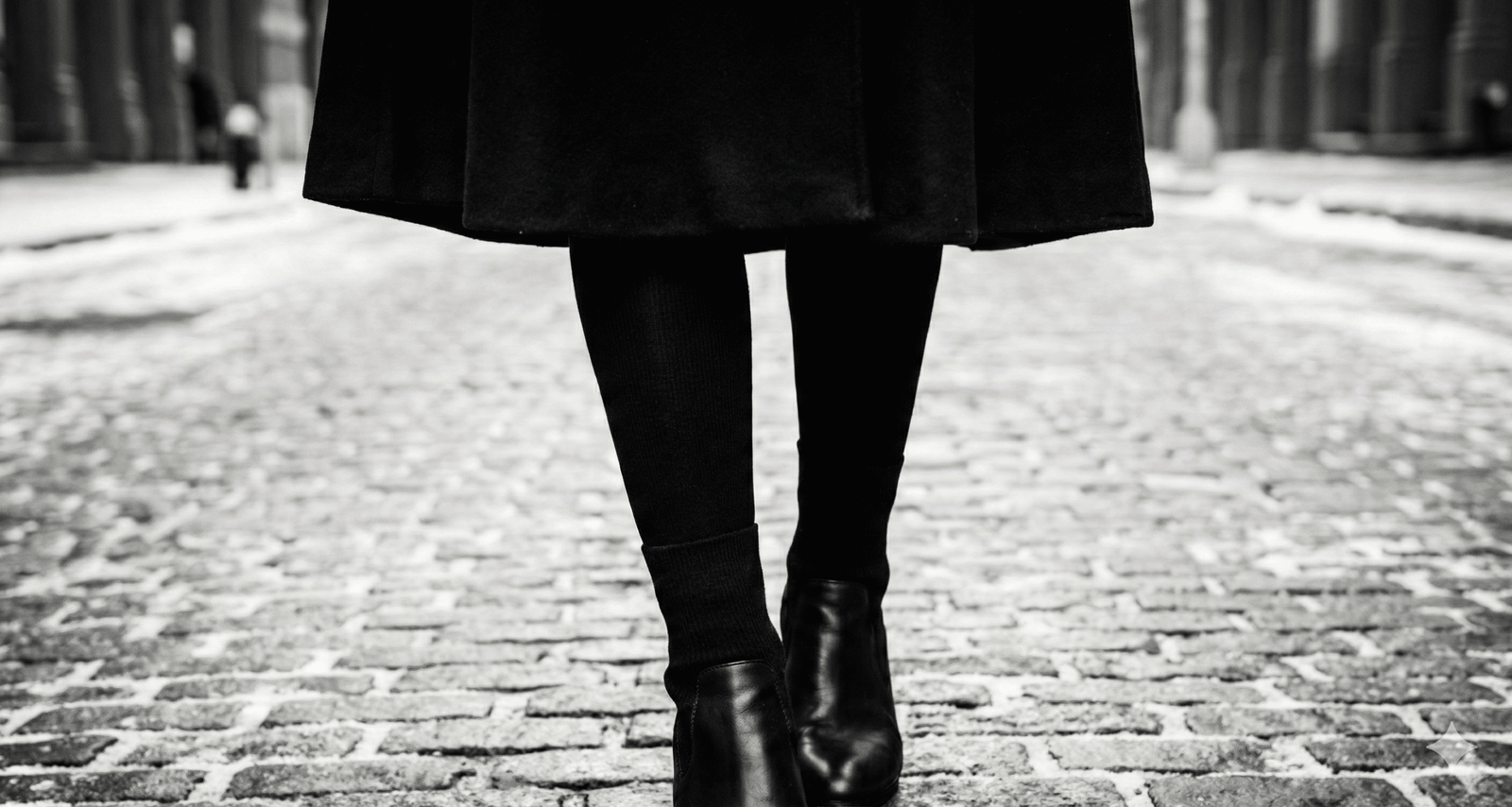
- The Problem: Most ankle boots cut you off right at the ankle bone. The midi dress cuts you off at the calf. You create the “stump effect.”
- The Fix: If you wear an ankle boot, it MUST have a tight shaft. It needs to hug your ankle like a sock (the “Sock Boot”). If the boot is wide and gaping at the ankle, your leg looks like a stick in a bucket.
- Height Requirement: If you are under 5’4″, proceed with extreme caution. If you wear ankle boots with a midi, ensure the boot is the same color as the dress or your tights to create a continuous vertical line.
2. The Knee-High / Tall Boot (The Hero)
This is the Fashiorial preferred method for winter.
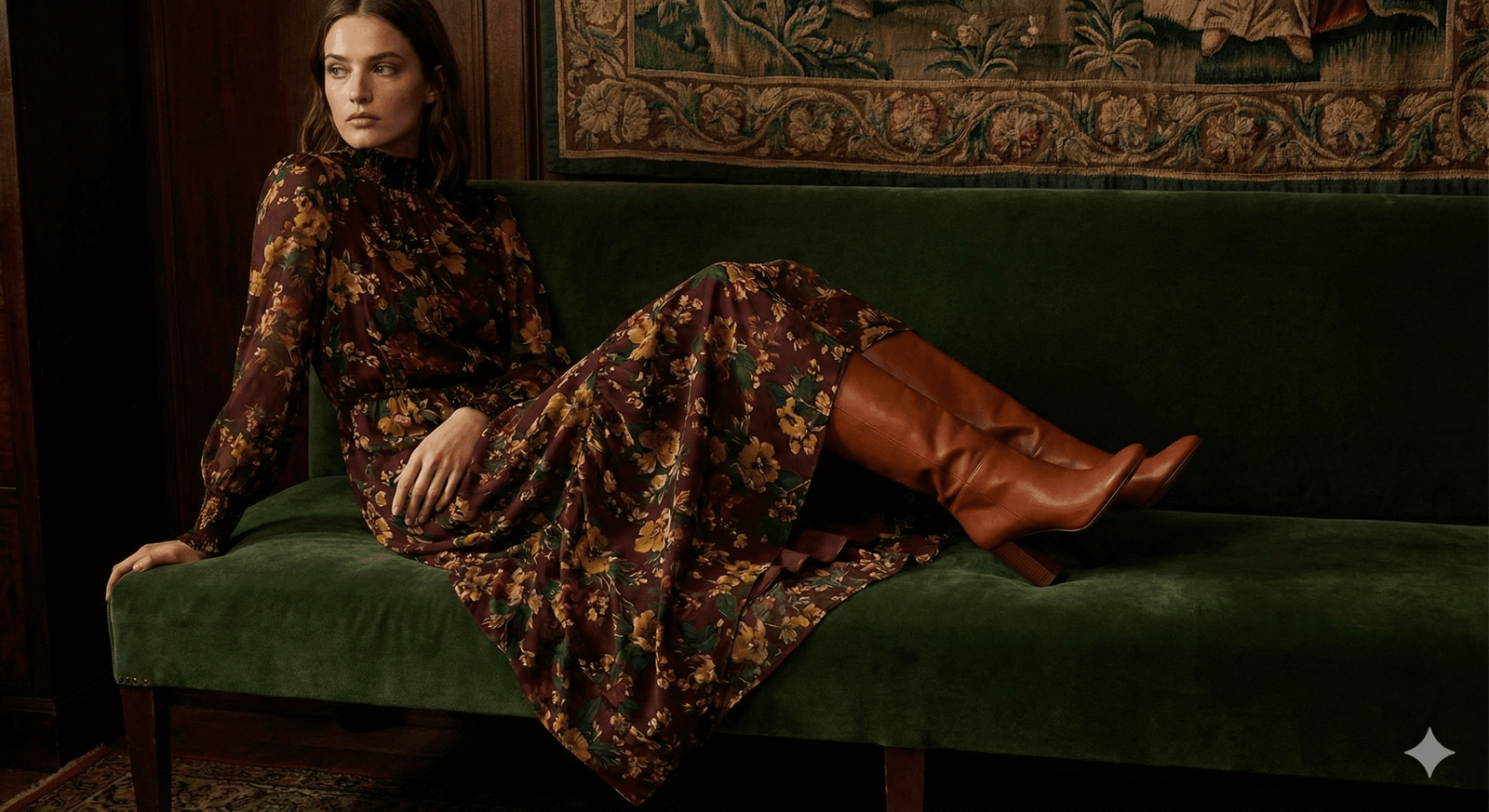
- The Strategy: Eliminate the skin gap entirely. The boot should go under the hem of the dress.
- Why it works: It creates a seamless column. There is no horizontal break. It is incredibly modest (perfect coverage) and incredibly warm.
- The Best Pairing: A flowy, floral chiffon midi dress paired with structured, stiff leather knee-high boots. The contrast between the soft fabric and the hard leather is fashion genius.
Pro Tip: Do not wear slouchy boots with a midi dress. The slouch adds bulk to the calf, which is exactly where the dress adds width. Keep the boot shaft sleek.
Category C: The Sneaker (The Millennial Uniform)
Can you wear sneakers with a midi dress to the office? In 2026, yes. But not just any sneaker.
The Rules:
- The “Dad” Sneaker: Chunky, athletic sneakers look amazing with feminine dresses. It’s the “wrong shoe theory”—wearing something unexpected makes the outfit cool.
- The Low-Top Canvas: A simple white Converse or minimalist leather sneaker works best with jersey or cotton midi dresses.
- The “Never” List: Do not wear high-top basketball sneakers with a midi dress unless you are incredibly tall. The high-top cuts off the ankle (just like the bootie), and the flat sole gives you no height help. It is a recipe for short legs.
Modesty Note: Sneakers ground an outfit. If you feel your midi dress is “too fancy” for a Tuesday morning meeting, add clean white leather sneakers. It instantly signals “I am efficient and practical.”

Part 4: The “Do’s and Don’ts” Matrix
To rank for our target keyword, we need to be very specific. Here is the cheat sheet.
The “Absolutely NOT” List (Burn These Looks)
- Ankle Strap Heels with Wide Straps: If the strap is thick (over 1 inch) and wraps around your ankle, and your dress hits mid-calf, you have successfully chopped your leg in half. Avoid.
- Mid-Calf Gladiator Sandals: These are chaos. Too many horizontal lines fighting with the hem.
- Wedge Sneakers: These had their moment in 2012. Leave them there. They look heavy and confused with a midi silhouette.
- Round-Toe Pumps with a Calf-Length Dress: Unless you are going for a costume-drama 1940s look, this often looks dowdy. A pointed toe is always sharper and more modern.
The “Always YES” List (Billion Dollar Combinations)
- Pointed Toe Slingbacks + Pencil Midi Skirt: The slingback reveals the heel (elongating), and the pointed toe extends the foot. It is the most flattering shoe possible.
- Platform Sandals + A-Line Midi: The volume of the skirt balances the chunkiness of the platform. Plus, you get height without the pain of stilettos.
- Tight Knee-High Boots + Slit Midi Dress: If your modest dress has a small slit, the tall boot provides coverage so you don’t reveal skin, but the slit allows the boot to be seen. Chic and modest.

Part 5: Color Theory and Leg Lengthening
The color of your shoe is just as important as the shape.
The “Nude” Illusion
If you are petite or worried about the midi length shortening you, your best friend is the Nude Shoe.
- Definition: “Nude” means a color that matches your skin tone (or the color of the hosiery you are wearing).
- The Effect: It blurs the line between foot and leg. A beige pump on beige skin makes the leg look like it continues all the way to the toe box.
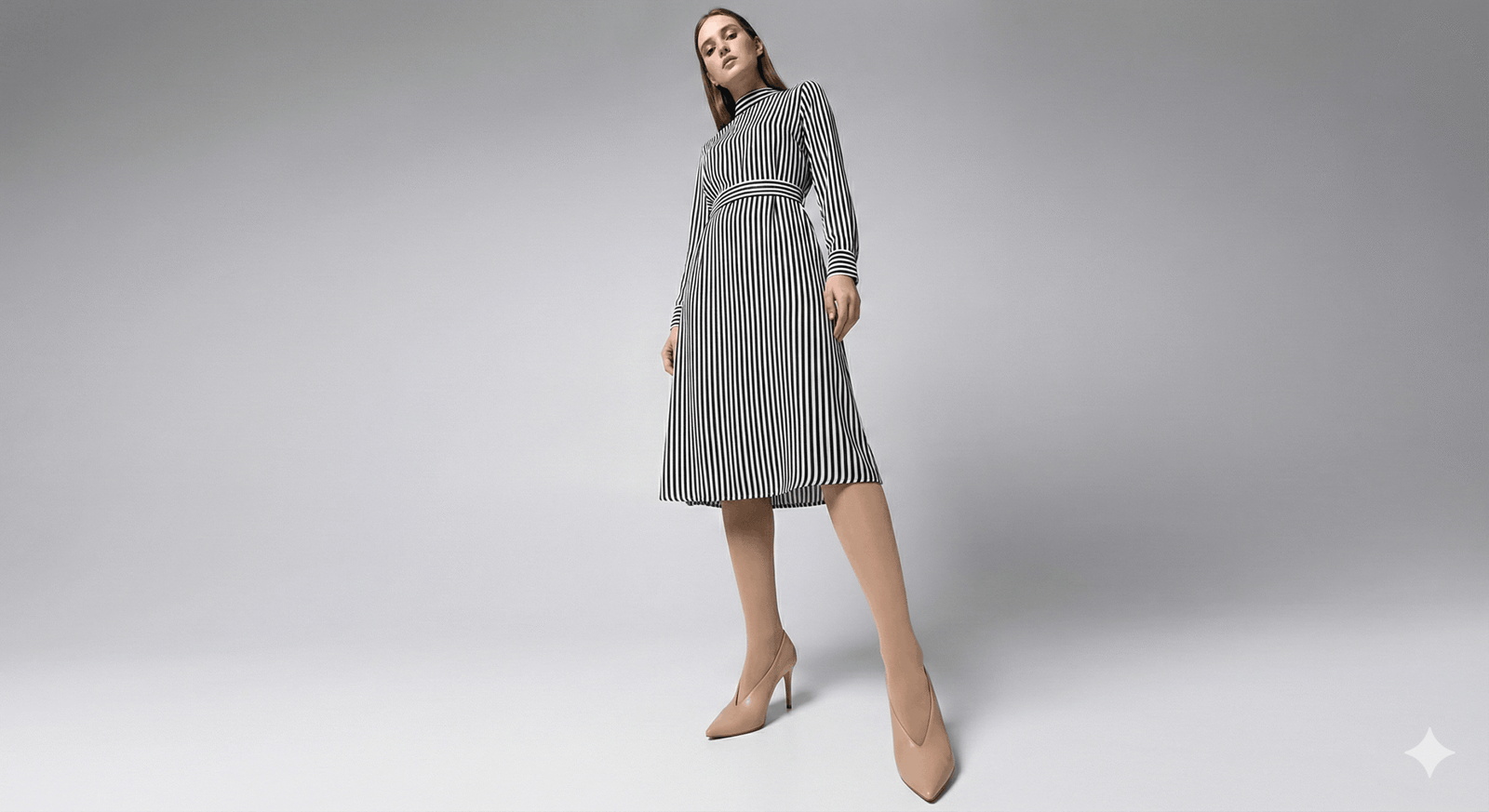
- The Application: If wearing a tea-length dress (the hardest length), wear a nude pump. It buys you back the visual inches the dress took away.
The “Bookend” Method
This is a styling trick to make an outfit look cohesive. Match your shoes to your hijab, your hair color, or your top.
- Example: Black Hijab + Green Midi Dress + Black Boots.
- Why it works: Your eye creates a connection between the top and bottom, sandwiching the dress. It makes the look intentional.

Part 6: Occasion-Based Lookbooks
Let’s apply this to your actual life. Here are four scenarios.
Scenario 1: The Corporate Boardroom (Serious & Sharp)
- The Dress: A charcoal grey wool midi dress, tailored and structured.
- The Shoe: A burgundy or black pointed-toe power pump (3-inch heel).
- Why: The pointed toe screams authority. The heel lifts your calf muscle, making it look leaner under the hem.
- Modest Check: Ensure the dress has a back vent (slit) for walking ease, but wear opaque tights if the vent goes high.
Scenario 2: The Creative Agency / Casual Friday (Trendy)
- The Dress: A pleated satin midi skirt in champagne or silver.
- The Shoe: A white chunky athletic sneaker or a Doc Martens style combat boot.
- Why: The contrast. Satin is delicate; the shoe is tough. This implies you are creative and don’t take yourself too seriously.
- Modest Check: Pleated skirts have a lot of fabric. Ensure they don’t cling.
Scenario 3: The Winter Wedding (Elegant & Warm)
- The Dress: A velvet long-sleeve midi dress in emerald green.
- The Shoe: A gold strappy sandal (if indoors) or a sleek black velvet sock bootie (if traveling/outdoors).
- Why: Velvet on velvet is luxe. If wearing the sandal, ensure it has a delicate, thin strap, not a thick cuff.
Scenario 4: The Weekend Brunch (Effortless)
- The Dress: A floral cotton button-down midi.
- The Shoe: A tan leather slide sandal (H-strap style) or a suede espadrille wedge.
- Why: It feels airy and light. The wedge gives height (good for the midi) but is comfortable enough for standing in line for coffee.
Part 7: The Critical Angle – Petite vs. Tall
We promised to be prescriptive based on height. Here is the hard truth.
If You Are Under 5’4″ (Petite)
- Avoid: Mid-calf lengths that hit the absolute widest part of your leg. Hem your dresses to sit either just below the knee or just above the ankle.
- Avoid: Horizontal ankle straps.
- Avoid: Flat Chelsea boots with round toes.
- Your Best Friend: The Pointed Toe. Whether it’s a flat or a heel, the point adds 2 visual inches. Always choose a V-neck vamp shoe.
If You Are Over 5’8″ (Tall)
- You Can Wear: The “awkward” lengths. You can pull off the mid-calf bootie that cuts the leg because you have leg to spare.
- Your Best Friend: The Loafer and the Oxford. You can embrace menswear-inspired flats without looking dumpy.
- Experiment: Try high-vamp shoes like glove shoes or shooties (shoe-booties).
Part 8: The Sock and Hosiery Factor (Modesty Essentials)
For the modest dresser, bare legs are often not an option, especially in professional settings or winter.
The “Continuous Line” Technique
If you are wearing black boots, wear black opaque tights. This makes your leg and foot look like one long, unbroken line. This is the most slimming and elongating trick in the book.
The “Statement Sock”
If you are wearing loafers with a midi dress, you have an opportunity.
- The Trend: White ruffled socks with black loafers.
- The Risk: It creates a horizontal white line at the ankle.
- How to fix: Ensure the sock is thin and delicate. A chunky wool sock will add bulk to your ankle. Use a sheer glitter sock or a fine-gauge cotton sock.
Skin-Tone Tights
If you want the look of bare skin (e.g., wearing a beige shoe) but need the coverage/warmth, invest in fleece-lined tights that match your skin tone perfectly. Fashiorial recommends brands that offer diverse shade ranges. A bad color match looks like plastic doll legs—avoid at all costs.

Part 9: Fabric Weight and Shoe Weight
This is the “Advanced” level of the Fashiorial styling course. You must match the weight of the shoe to the weight of the dress.
Heavy Dress + Light Shoe = Imbalance
Imagine a heavy, cable-knit sweater dress worn with flimsy flip-flops. It looks top-heavy, like you might tip over.
- Rule: Winter fabrics (wool, knit, velvet) need “visual weight” on the feet. Think boots, block heels, or thick-soled loafers.
Light Dress + Heavy Shoe = Grunge (Intentional)
Imagine a silk slip dress with heavy combat boots.
- Rule: This breaks the balance rule, but in a fashionable way. It anchors the light fabric. However, wearing a silk dress with a heavy, orthopedic-looking running shoe just looks mismatched. The “heavy” shoe must be stylish (leather/boots), not purely functional.
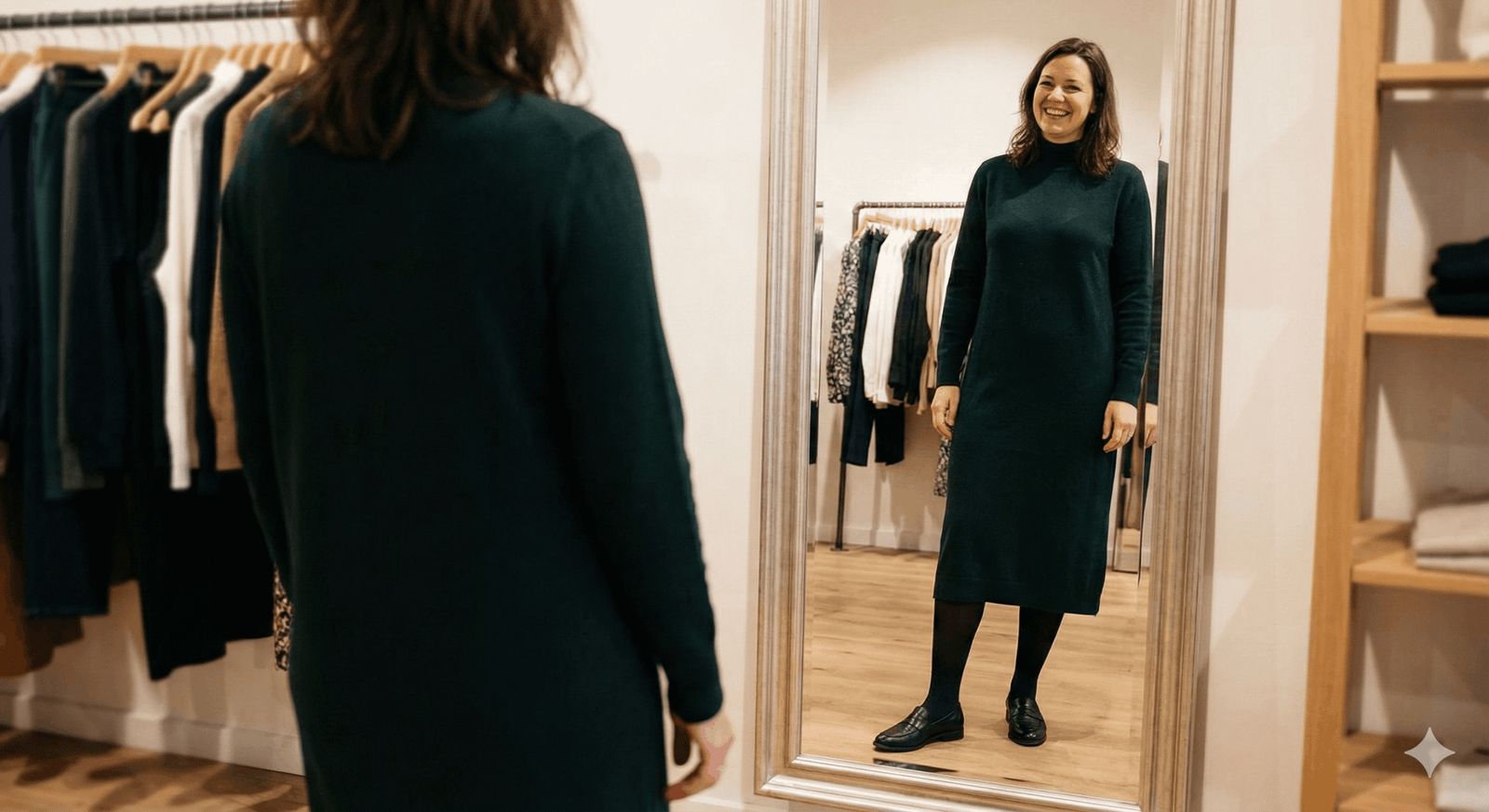
Trust the Mirror, Not the Trend
The midi dress is a staple of the modest wardrobe for a reason. It is dignified, versatile, and beautiful. But it demands respect. It demands that you think about your footwear.
The next time you face The Shoe Dilemma, run through the Fashiorial Checklist:
- Where does the hem hit? (Knee, Calf, or Ankle?)
- Does the shoe cut me off? (Watch the ankle strap).
- Is the vamp low enough? (Show some foot skin to lengthen the leg).
- Is the balance right? (Chunky dress needs chunky shoes).
You do not have to have supermodel legs to look incredible in a midi dress. You just need to understand the geometry. When you get the proportions right, you don’t just look taller; you look more competent, more put-together, and infinitely more stylish.
Go forth and stride with confidence.
Quick Recap: The Cheat Sheet
- Midi + Ankle Boot: Only if the boot is tight like a sock.
- Midi + Knee Boot: The perfect winter pairing.
- Midi + Loafer: The cool-girl office look.
- Midi + Pointed Pump: The leg-lengthening miracle.
Frequently Asked Questions
Q: Can short people wear midi dresses? A: Absolutely. The myth that petite women can’t wear midis is false. The secret is fit. Ensure the midi doesn’t stop at the widest part of your calf. Hem it to just below the knee. And always, always choose a pointed-toe shoe to extend the line.
Q: What shoes to wear with a midi dress for a wedding? A: Block heel sandals are the best choice. They are comfortable for dancing, provide height for the dress, and look elegant. If it’s a winter wedding, opt for a velvet pump or a sleek sock bootie.
Q: Can I wear flats with a midi dress? A: Yes, but choose the right flat. A ballet flat with a low vamp (showing toe cleavage) is very flattering. A high-vamp sneaker or loafer is trickier and works best on taller frames or with casual styling.
Q: How do I wear boots with a midi dress without looking short? A: Match the boot color to the dress color. If you have a black dress and black boots, your body creates one long vertical column. If you wear a black dress with white boots, you chop your height. Monochromatic dressing is the key to height.