
The Science of ‘Sweat-Proof’ Hijabs: Why Your Neck Feels Like a Swamp in the Office
The Science of ‘Sweat-Proof’ Hijabs: Why Your Neck Feels Like a Swamp in the Office
The room is so cold that it feels like your neck is stuck in a tropical rainforest.
The modern Muslim professional is silently fighting to keep their cool at work while their hijab makes them feel like they’re in a sauna. Finding real sweat-proof hijabs isn’t just about comfort; it’s also about staying at your best without getting too hot.
You’re not the only one who has had to adjust their scarf in the middle of a presentation or felt that awful trickle of moisture during a meeting with a client. This guide breaks down the thermodynamics of modest fashion to finally end the “swamp neck” problem.
Why “Swamp Neck” Happens: The Physics of Fabric and Heat
Most women think they are just naturally hot-headed, but the real problem is the textile engineering that is wrapped around their heads.
The temperature of the room is not the only thing that affects how well fibers hold heat. Fiber density and moisture-wicking ability also play a role. When you layer synthetic fabrics that don’t let air through, you make a micro-climate against your skin that keeps heat in.
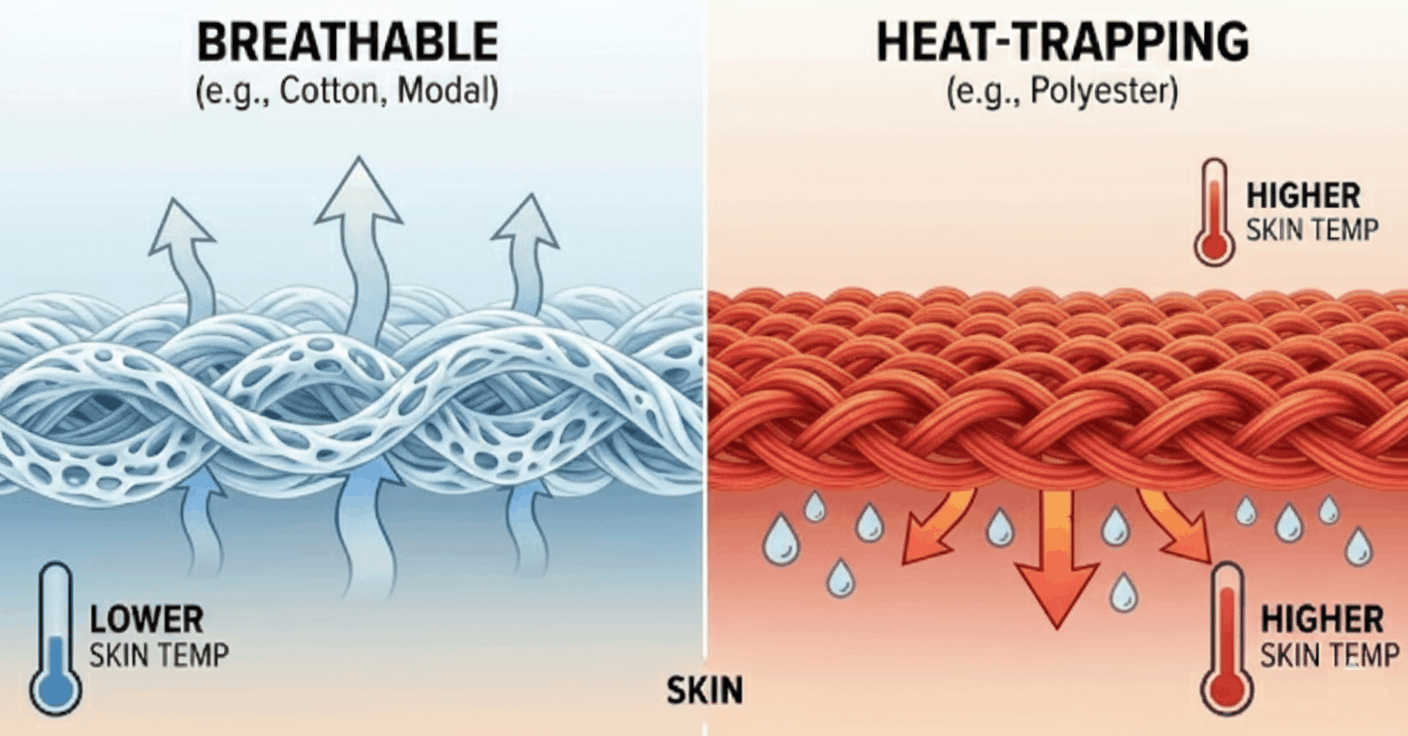
The Greenhouse Effect on Your Skin
Standard polyester chiffons, the go-to for their drape and affordability, are essentially plastic sheets woven into threads.
They permit light to pass through but trap the infrared heat your body radiates. This creates a literal greenhouse effect, raising the skin temperature at your neck by several degrees higher than the ambient room temperature.
- Zero Moisture Transfer: Sweat sits on the skin rather than evaporating.
- Static Buildup: Synthetics generate friction, causing clinging that reduces airflow.
- Odor Trapping: Bacteria thrive in warm, damp environments created by non-porous weaves.
How to Choose Performance Fabrics for the Office
It’s helpful to know the science, but what will really help you get through the day is having solutions that you can use.
The best way to get rid of hijab heat is to use cooling under-caps and focus on natural fibers with open weaves. This makes a ventilation channel that pulls moisture away from the skin, lowering the temperature of the surface and stopping sweat from building up during stressful office hours.
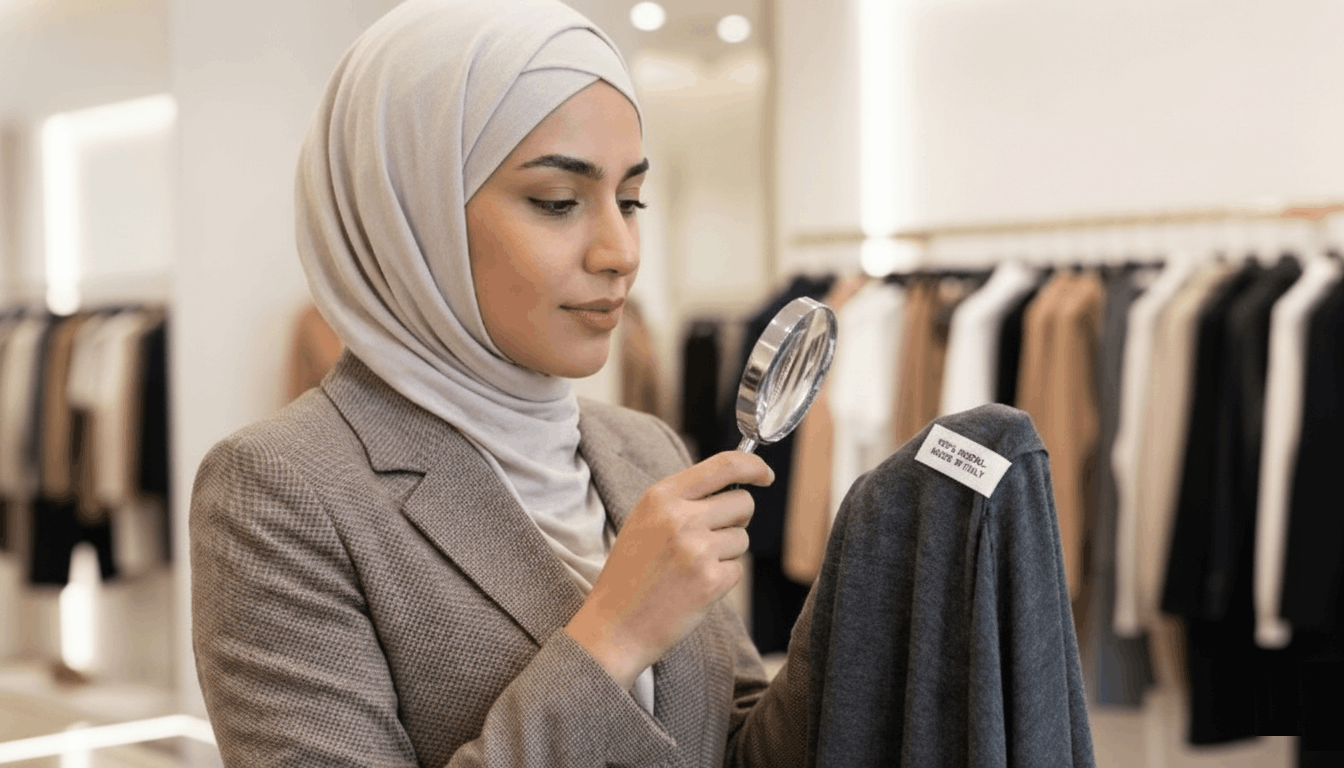
The “Cool-Touch” Criteria
You need to become a label detective to rule the office without getting too hot.
You need to find the words Modal, Bamboo, Tencel, and lightweight Cotton Voile. These fibers are hydrophilic, which means they pull water molecules toward them and away from your body so they can evaporate on the fabric’s surface.
- Modal: Sourced from beech tree pulp, it is 50% more absorbent than cotton.
- Bamboo: Naturally antibacterial and cool to the touch.
- Rayon: A semi-synthetic that mimics silk but breathes like cotton.
The Hierarchy of Breathable Headscarves
Not all scarves are created equal, and your choice should depend on your specific office environment.
We have ranked the top contenders based on the “Thermal Resistance Scale” (Ret), a measure used in textile engineering to determine resistance to evaporative heat transfer. Lower resistance means higher breathability, keeping you focused on your KPIs rather than your temperature.
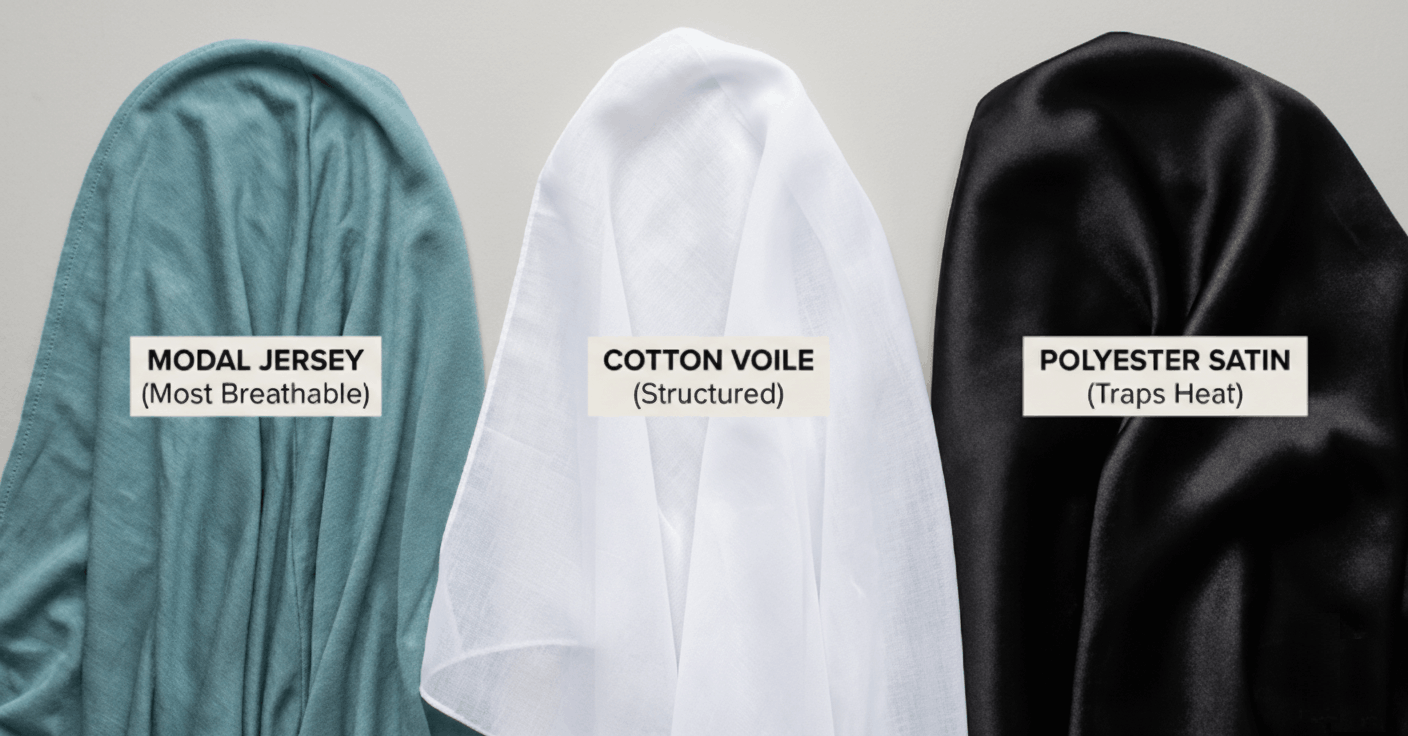
1. The Undisputed Champion: Modal Jersey
If you have a high-stakes meeting, reach for Modal.
It drapes heavily enough to look professional but possesses a microscopic structure that allows air to flow freely. It creates a cooling sensation immediately upon contact with the skin, which is a lifesaver during summer commutes.
2. The Corporate Standard: Premium Cotton Voile
For those who prefer a structured look over the drape of jersey, cotton voile is the answer.
It is stiff enough to hold a peak but light enough to be translucent if not layered (use a matching under-cap). This is the gold standard for crisp, professional aesthetics that do not compromise on airflow.
3. The Risky Business: Silk and Satin
Silk is natural, but satin is a weave, not a fiber.
Real silk breathes well, but “satin” hijabs sold in fast-fashion outlets are usually 100% polyester. Always check the tag, because a polyester satin scarf is essentially a glamorous plastic bag for your head.
[According to a study by the University of Leeds on textile performance, natural fiber blends can reduce skin surface humidity by up to 30% compared to pure synthetics.]
The Under-Cap Equation: The Hidden Heat Trap
You can wear the most expensive breathable voile, but it is useless if your under-cap is suffocating you.
Many standard tube caps are made from cheap viscose-polyester blends that act as a thermal barrier. Think of your under-cap as the foundation; if the foundation is flawed, the entire cooling system fails.
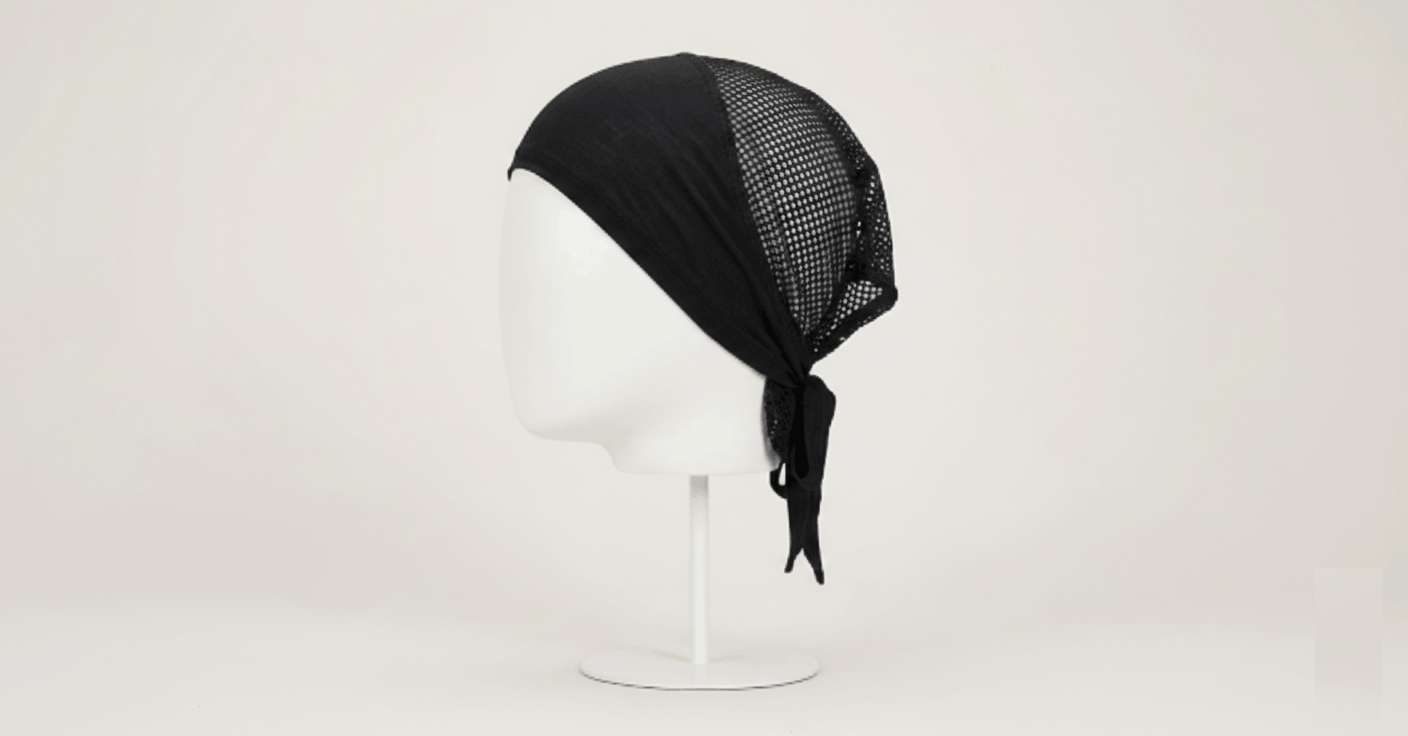
The Tube Cap vs. The Tie-Back
Tube caps rely on elastic tension to stay on, which can restrict blood flow and increase perceived heat.
Tie-back bonnets allows for adjustable tension and usually feature an open back for hair volume. Switching to a mesh-panel tie-back can increase airflow to the scalp by over 40%.
- Cotton-Lycra Blends: Good, but can get soggy if you sweat heavily.
- Bamboo Viscose: Excellent moisture management and odor control.
- Net/Mesh Inserts: The ultimate solution for maximum ventilation.
Styling Techniques to maximize Airflow
The way you wrap your hijab is just as critical as the fabric you choose.
A tight “Turkish Style” neck wrap might look sleek, but it seals off the chimney effect, trapping heat rising from your torso. Loosening the drape around the neck allows hot air to escape and cool air to circulate.

The “Chimney Effect” Wrap
To utilize physics in your favor, create a gap between the fabric and your neck.
Drape the scarf loosely over one shoulder rather than winding it tightly multiple times. Use magnetic pins instead of safety pins to secure the style without compressing the layers against your throat.
Color Theory and Thermodynamics
It is a known fact that black absorbs heat, yet it is the color of choice for corporate elegance.
If you must wear dark colors, choose fabrics with a slight sheen or lighter weight to compensate. Lighter shades like beige, taupe, and dove grey reflect solar radiation if you work near a window or commute outdoors.
The “Swamp Neck” Emergency Kit
Sometimes, despite your best efforts, the office heating system goes rogue.
Every prepared professional should keep a survival kit in her desk drawer. Being proactive is better than suffering in silence during a three-hour quarterly review.
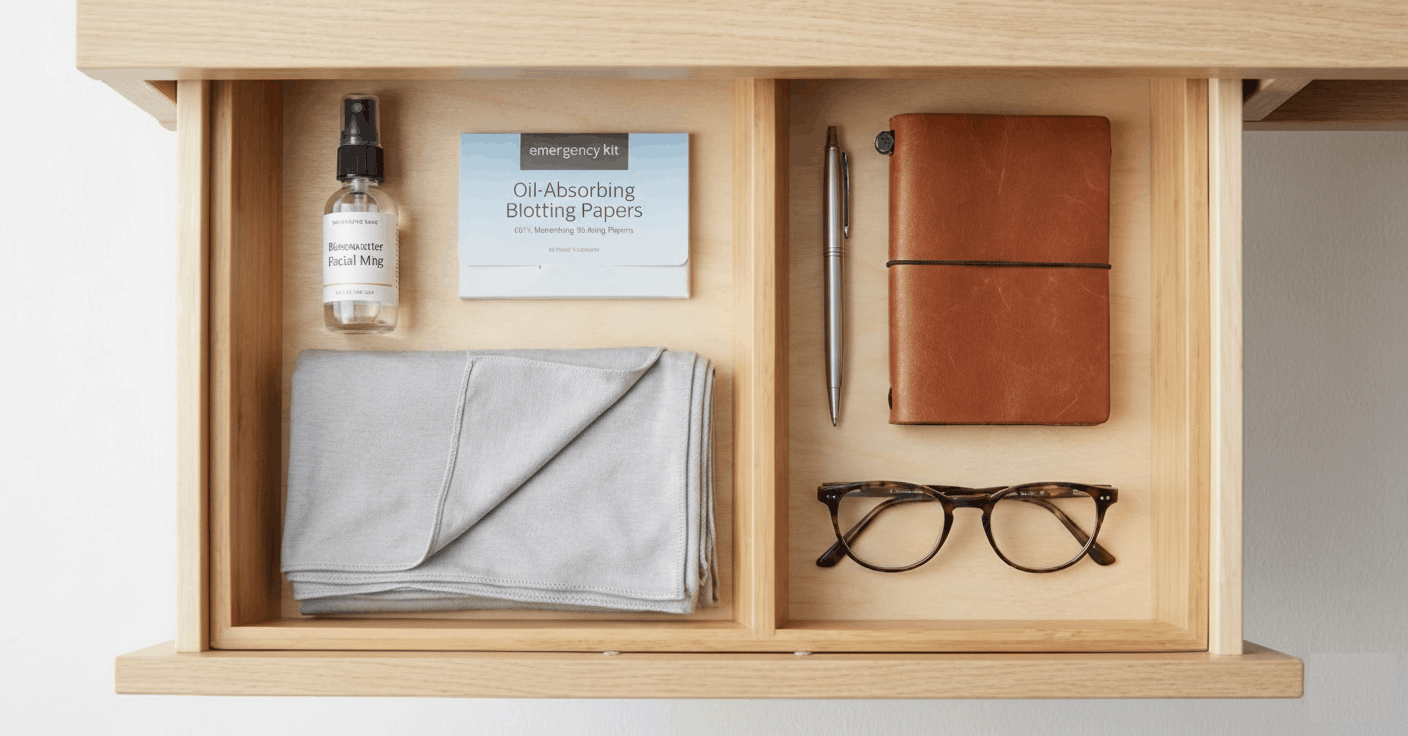
Essential Items for Cooling Down
- Facial Mist: A quick spritz of rosewater can cool the face and neck area instantly.
- Blotting Papers: Remove excess oil and sweat without ruining your makeup.
- The Spare Scarf: Keep a fresh Modal hijab in your bag for a mid-day swap if needed.
Reclaiming Your Comfort
You don’t have to choose between your faith, your job, and your health.
You can get rid of the distraction of discomfort by learning about how fibers work and making smart choices about what you wear. Buying real sweat-proof hijabs is a good way to improve your work and personal health.
Stop putting up with synthetic materials that ruin your day. Get better fabrics, change how you wrap, and walk into that boardroom with a clear head and full confidence.