
Forehead Acne & Undercaps: Why You’re Breaking Out (And How to Wash Silk Caps)
You peel off your hijab after a fourteen-hour day. The fabric feels heavy with sweat, and as you look in the mirror, there they are again. Those tiny, red, angry bumps marching across your hairline. It’s not just “bad skin.” It’s a specific kind of frustration that makes you want to scream. You wash your face. You drink the water. You buy the serums. But every time you wear your favorite undercap, the breakout returns with a vengeance.
We know the struggle. That feeling of being trapped between wanting to cover your hair modestly and wanting to let your skin breathe is exhausting. But here is the good news: it is not your skin’s fault. It is a mechanical issue, and mechanical issues have mechanical fixes.
Forehead acne & undercaps are linked by a cycle of friction and bacteria, but you can break that cycle today. In this guide, we are going to dismantle the “Hijab Acne” myth. We will explore why your favorite cotton tube cap might be your worst enemy, and we have a specific, $0 laundry hack in Section 4 that changes everything.

The “Greenhouse Effect” on Your Forehead
Let’s get technical for a second, but keep it simple. Why does this happen?
Your forehead is already part of the “T-Zone,” the oilest part of your face. When you layer an undercap tightly over it, you create what dermatologists call an occlusive environment.
Think of it like a greenhouse. Heat gets trapped. Sweat has nowhere to go.
The 3 Enemies of Your Hairline
When you wear a cap all day, three things happen simultaneously:
- Friction (Acne Mechanica): The fabric rubs against your skin thousands of times a day. This micro-friction weakens your skin barrier.
- Trapped Heat: Your scalp releases heat. If your cap isn’t breathable, that heat cooks your sebum (oil), turning it waxy and pore-clogging.
- Bacteria Transfer: If you re-wear a cap without washing it, you are essentially pressing yesterday’s bacteria back into today’s open pores.
Reality Check: “I thought my skin was just oily. Turns out, my polyester cap was suffocating my pores. Switching fabrics changed my skin in a week.” — Sarah, Fashiorial Reader
Cotton vs. Silk vs. Bamboo: The Fabric War
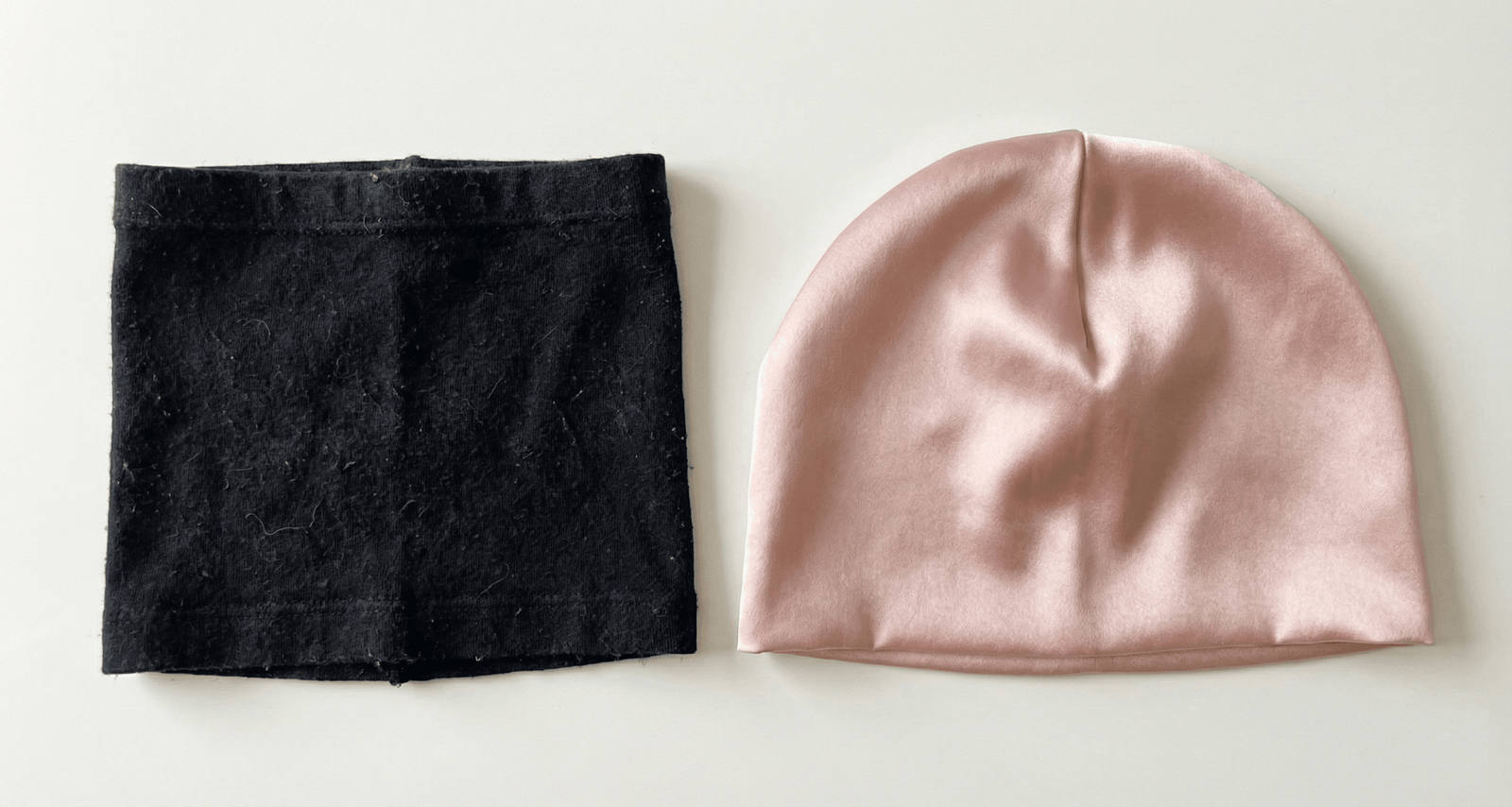
Not all undercaps are created equal. You might love those cheap cotton tube caps because they don’t slip, but they act like a sponge.
Cotton absorbs moisture. That sounds good, right? Wrong.
When cotton absorbs sweat, it holds it against your skin. It becomes a damp breeding ground for bacteria. Plus, cotton fibers are rough under a microscope. They scratch.
The Silk & Satin Solution
This is why the “Old Money” aesthetic and modest fashion influencers are pivoting to silk and satin-lined caps.
- Silk is hydrophobic (it repels moisture).
- Silk reduces friction (it glides, it doesn’t rub).
- Silk is temperature regulating (it keeps your forehead cool).
Fabric Comparison Table
| Feature | Cotton | Polyester | Silk/Satin |
| Breathability | High | Low | Medium/High |
| Texture | Rough/Absorbent | Smooth/Sweaty | Smooth/Gliding |
| Acne Risk | High (Bacteria sponge) | High (Heat trap) | Lowest |
| Hair Protection | Low (Dries hair out) | Low | High |
How to Wash Silk Caps (Without Ruining Them)
Okay, so you invested in a silk or satin-lined undercap to save your skin. Now, how do you clean it?
If you throw raw silk into the washing machine with your jeans, you will ruin it. Silk fibers break comfortably when wet. They need gentle handling. But you also need to get the oil and bacteria out to prevent acne.
The best way to wash silk caps is to hand wash them using cool water and a pH-neutral detergent. Avoid twisting the fabric, which breaks fibers. Instead, gently swirl the cap for 3-5 minutes, rinse with cool water, and lay it flat on a dry towel to air dry. This preserves the silk’s antibacterial properties while removing pore-clogging oils.
The Step-by-Step “Silk Safe” Method
- Fill a Basin: Use lukewarm or cool water. Never hot. Heat cooks the protein fibers in silk.
- Add Detergent: Use a drop of gentle shampoo or specific silk wash. Do not use harsh laundry powder or bleach.
- Submerge & Swirl: Push the cap under. Swirl it gently with your hand. Do not scrub it like you are trying to get a stain out of a carpet.
- The Soak: Let it sit for 5 minutes. No longer.
- Rinse: Run cool water through it until no bubbles remain.
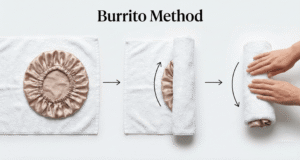
- The Towel Press: Lay the wet cap on a clean, dry towel. Roll the towel up like a burrito. Press down gently to squeeze out water.
- Air Dry: Unroll and lay flat. Never hang it in direct sunlight (sun fades the dye).
The “Secret” Laundry Mistake Causing Your Breakouts
Remember the $0 fix we promised? Here it is.
It is not the cap. It is your fabric softener.
Fabric softener works by coating fibers with a thin layer of wax and fragrance to make them feel “soft.” When you use softener on your undercaps (even cotton ones), you are coating the fabric in a waxy film.
When you sweat, that waxy film melts onto your forehead. It clogs your pores instantly.
The Fix:
Stop using fabric softener on anything that touches your face. This includes your pillowcases, your niqabs, and especially your undercaps. Use white vinegar in the rinse cycle instead. It softens fabric naturally and kills bacteria without the waxy residue.
Skincare Adjustments for Hijabis
Changing your cap is half the battle. The other half is protecting your skin before you put the cap on.
You need a barrier.
If you know you have a long day ahead, avoid heavy, oil-based foundations on your forehead. They will mix with sweat and turn into sludge under your cap.
The “Commuter” Routine
Try this lightweight approach for work or school days:
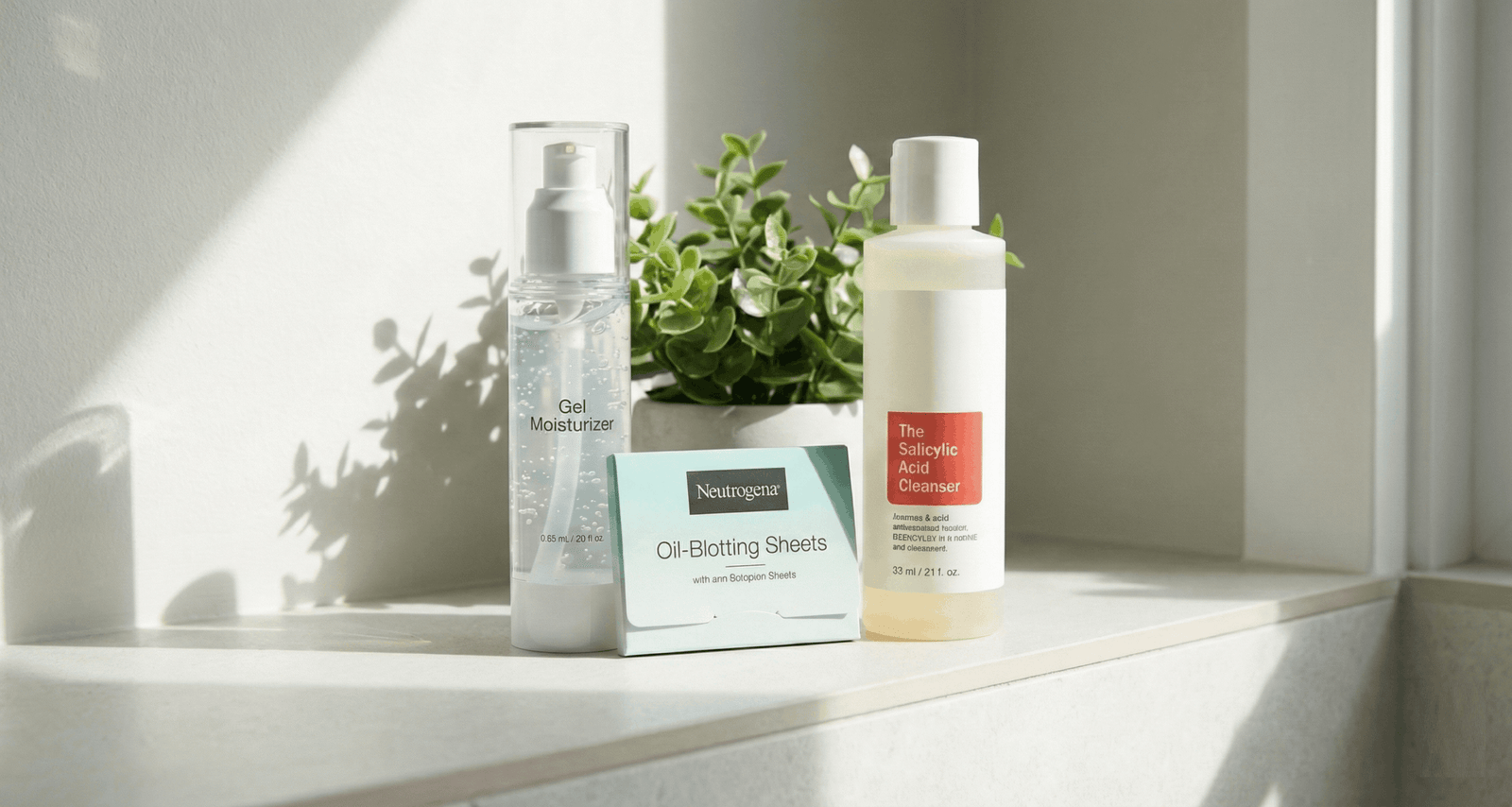
- Salicylic Acid Cleanser: Use this at night to dissolve oil deep in the pores.
- Light Moisturizer: Use a gel-based moisturizer, not a heavy cream.
- Blotting Papers: Keep these in your bag. If you go to the bathroom to make wudu, take 10 seconds to blot your forehead before putting your cap back on.
When to Throw It Out
We all have that one favorite black undercap. It’s stretched out, faded, and has a tiny hole, but it’s comfortable.
You need to let it go.
Over time, fabric fibers break down and become rougher. This increases the friction on your skin. If your undercap has lost its elasticity, it will slide around more.
More sliding = More friction = More acne.
Aim to replace your heavily rotated undercaps every 6 months. Think of them like toothbrushes. They are hygiene tools, not heirlooms.
Summary: Your Clear Skin Checklist
You don’t have to choose between modesty and clear skin. You just need to be smarter than the bacteria.
Let’s recap your action plan:
- Switch Fabrics: Move from cotton to silk or satin-lined caps.
- Wash Smart: Hand wash silk; never use fabric softener.
- Create a Barrier: Keep heavy makeup off your forehead.
- Rotate Often: Don’t wear the same cap two days in a row without washing it.
Your forehead will thank you. The coolness of silk against your skin feels like luxury, but the real luxury is waking up without new bumps.