
The ‘5-Minute’ Morning Routine: Modest Exam Season Outfits for Stressful Days
Your cortisol levels are rising, you have three textbooks open, and the clock is ticking. You don’t want to waste your valuable mental energy staring at your closet. Decision fatigue is a real GPA killer, and your choices about what to wear in the morning shouldn’t make it worse.
The “5-Minute” Morning Routine: Modest Exam Season Outfits for Stressful Days is not just about fashion; it’s also about keeping your mind sharp. By simplifying your style, you get more time to study. Let’s make the most of your morning so you can do your best in school.
The Psychology of the Exam Uniform
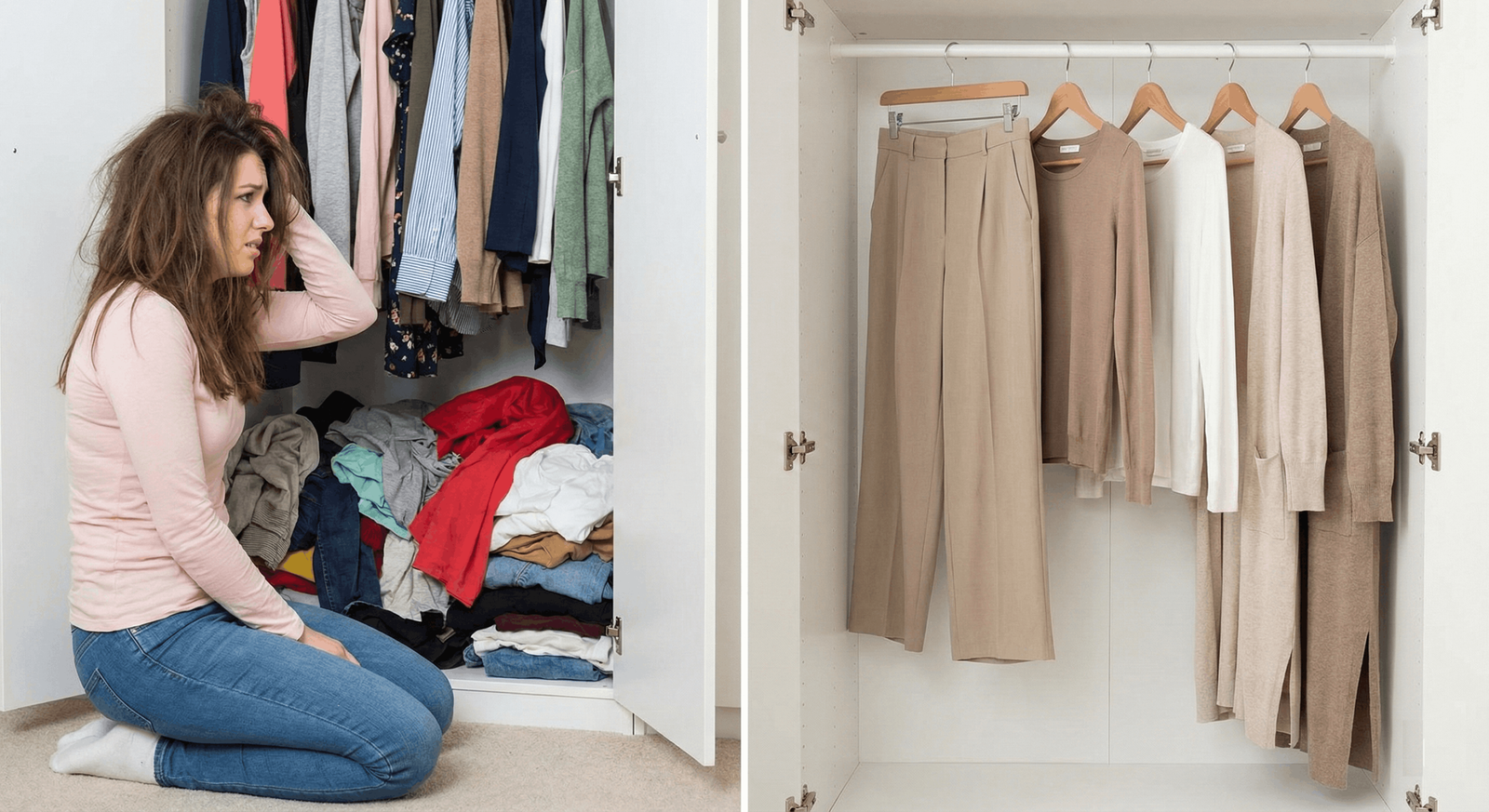
Your clothing choices directly impact your cognitive function. Enclothed cognition is a phenomenon suggesting that what we wear influences how we think.
If you wear chaotic, uncomfortable clothing, your brain enters a state of distraction. You need a uniform that signals “focus” to your subconscious.
[According to a study published by Northwestern University, wearing clothes associated with “care and attention” significantly increases performance on attention-based tasks.]
Therefore, your exam season wardrobe must be pre-planned. It must be comfortable enough for a 3-hour exam but structured enough to keep you alert.
- Eliminate friction: Remove items that require ironing or adjusting.
- Prioritize sensory ease: Scratchy tags and tight waistbands destroy focus.
- Establish a signal: A specific blazer or scarf can trigger “work mode.”
- Adhere to modesty: Loose silhouettes promote airflow and comfort.
- Automate the choice: Know exactly what you are wearing the night before.
Constructing the High-Performance Capsule
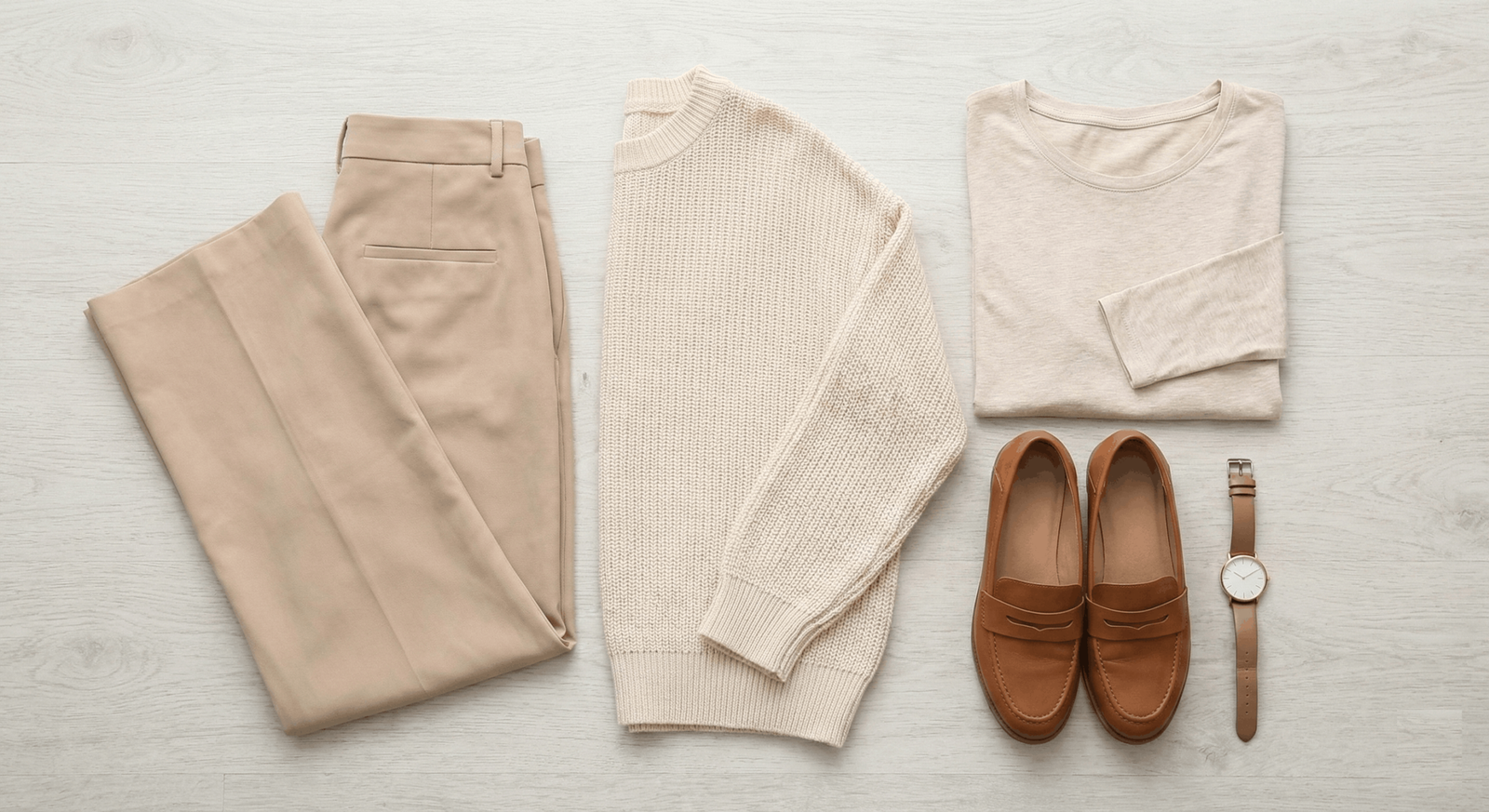
The best way to put together a simple exam outfit is to wear a uniform of loose, breathable layers in neutral colors. For example, you could wear wide-leg pants with an oversized knit and a structured outer layer. This makes a “comfort-focus” balance that keeps you from getting too distracted by your senses while still keeping a professional, academic mindset.
You need the right building blocks to do this. We are making a capsule that is easy to mix and match.
Start with the bottoms, since they will affect how comfortable you are when you sit for long periods of time. You have to wear wide-leg pants or maxi skirts here.
Don’t wear stiff denim that digs into your waist. Choose ponté knit fabrics that look like dress pants but feel like pajamas.
The “Power Top” Equation
Your top half is what you, and others, see the most. It needs to be breathable to handle stress-induced body temperature changes.
Layering is the secret weapon for exam halls with unpredictable air conditioning. Start with a lightweight cotton base layer.
Over this, add a loose, modest tunic or an oversized sweater. This provides coverage and warmth without restriction.
- Cotton Button-Downs: Crisp, professional, and breathable.
- Oversized Cashmere/Wool Blends: Soft sensory input for calming nerves.
- Turtlenecks: High modesty factor and cozy neck protection.
- Long Cardigans: Acts as a “safety blanket” while looking chic.
- Jersey Tunics: wrinkle-resistant for long days.
The ‘5-Minute’ Morning Routine: Modest Exam Season Outfits for Stressful Days Explained
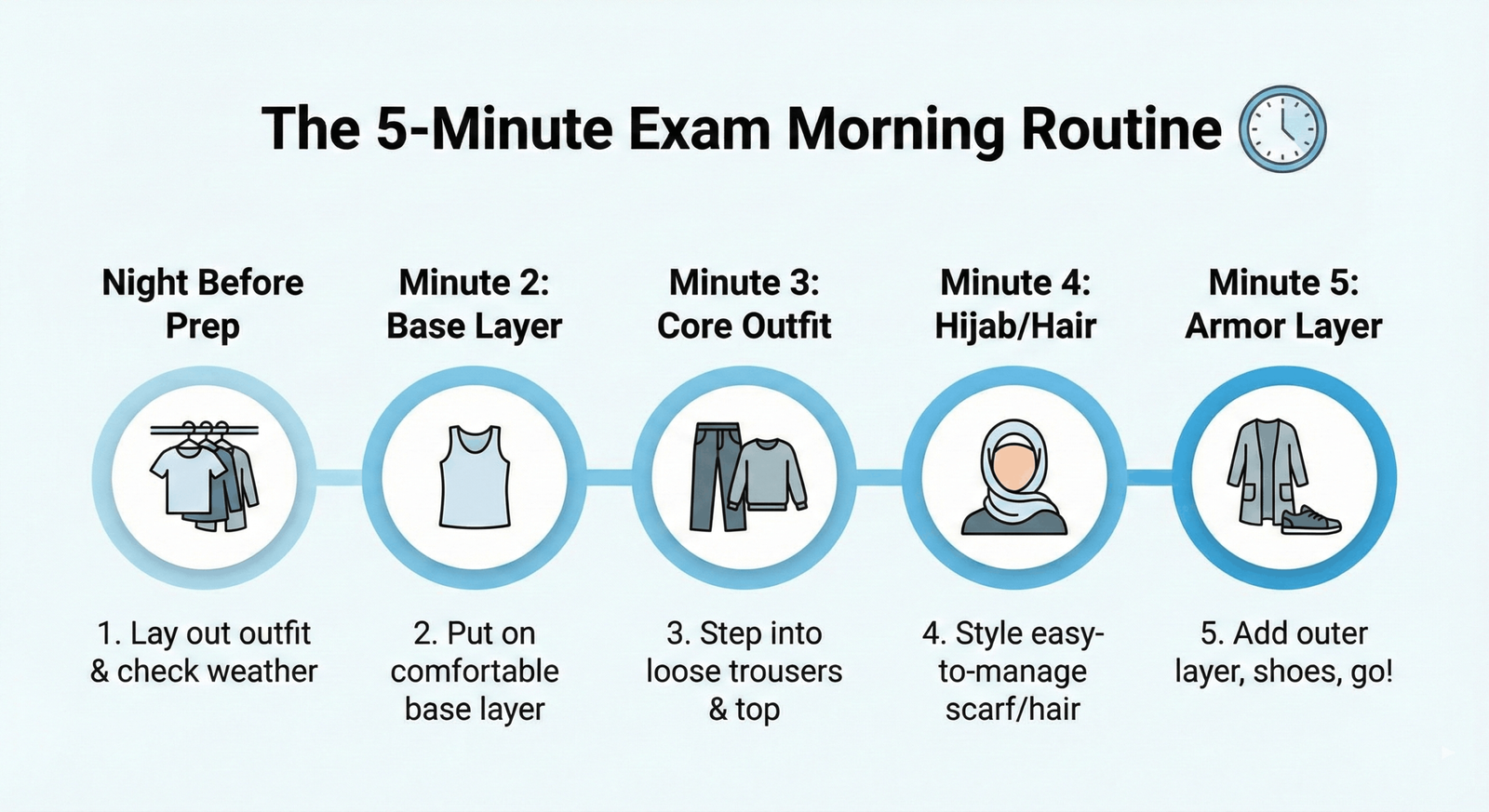
This is the core of your strategy. This routine is designed to be executed on autopilot, saving your brainpower for the exam paper.
Minute 1: The Night-Before Prep. You cannot decide this in the morning. Check the weather the night before. Lay your entire outfit, including socks and undergarments, on a chair.
Minute 2: The Base Layer. Wake up and immediately hydrate. Put on your chosen base layer (leggings/undershirt). This signals to your body that sleep is over.
Minute 3: The “Uniform” Core. Step into your pre-selected trousers and main top. Ensure everything fits loosely. If you have to suck it in, take it off immediately.
Minute 4: The Hijab or Hair Strategy. For modest dressers, the hijab style matters. Avoid slippery fabrics like silk that require constant adjusting. Use a jersey or cotton modal scarf that stays put without pins.
Minute 5: The “Armor” Layer. Add your final layer, a trench, a long cardigan, or a denim jacket. This is your shield against the world. Put on your shoes and walk out the door.
Fabric Science: Material Matters for Stress Control
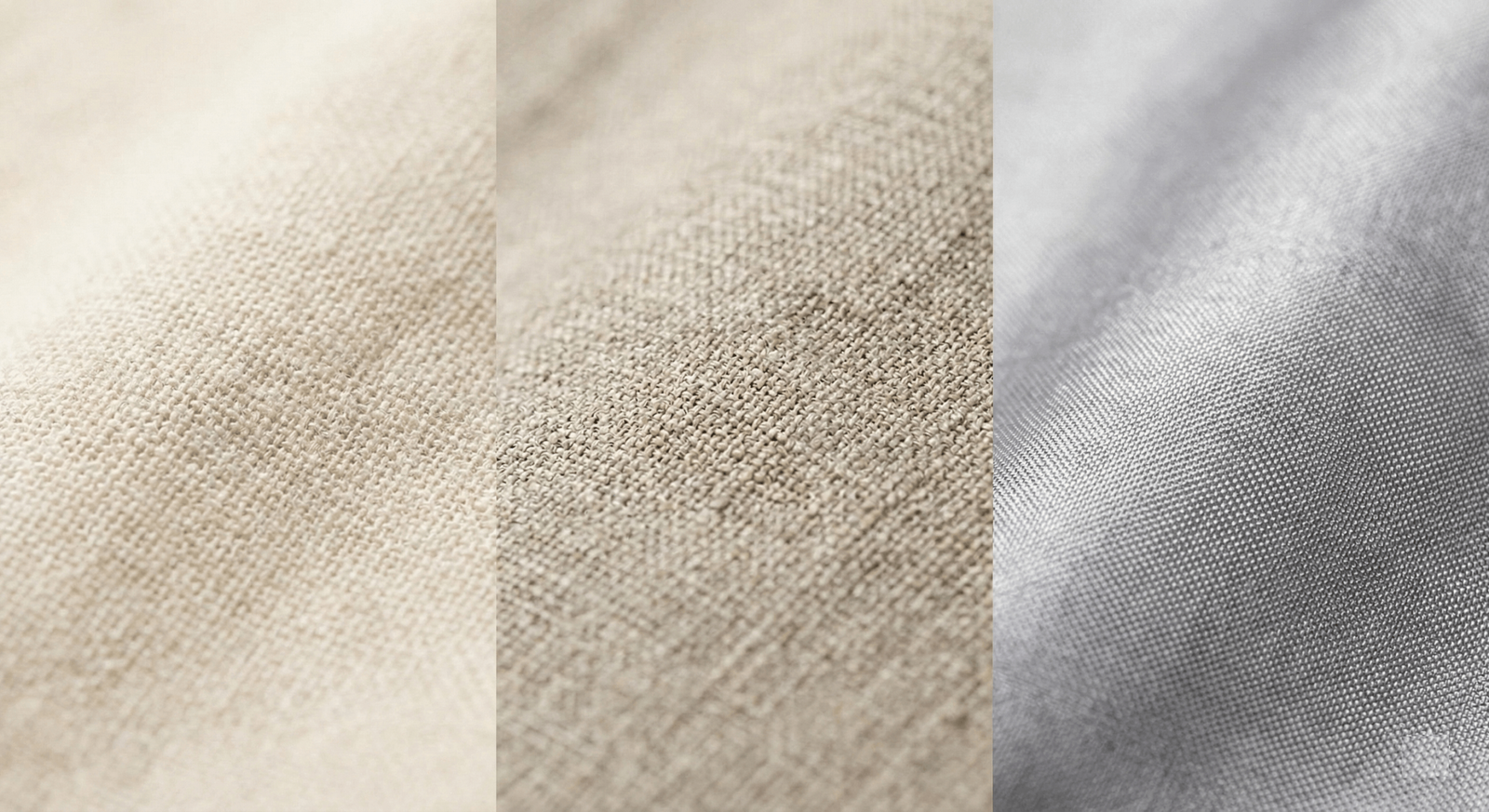
Stress causes physical reactions, including sweating and overheating. Your outfit must manage moisture effectively.
Synthetics like cheap polyester trap heat and odor. This creates a microclimate of discomfort that distracts you from your thesis statement.
You must prioritize natural fibers during exam season. Cotton is the gold standard for breathability.
However, be careful with 100% linen as it wrinkles easily, which might make you feel disheveled. Cotton blends are your best friend.
Sensory Processing and Focus
The texture of your clothing acts as background noise. Itchy wool is like a car alarm going off while you try to study.
Soft, brushed fabrics provide a soothing tactile experience. This lowers your baseline anxiety.
Look for “peach skin” finishes or high-quality modal. These fabrics drape beautifully without clinging.
- Avoid: Rough wool, unlined sequins, stiff polyester tags.
- Embrace: Pima cotton, bamboo viscose, brushed fleece.
- Check Seams: Ensure they lay flat against the skin.
- Test Mobility: Can you raise your hand without the shirt lifting?
- Waistbands: Elastic backs are superior to fixed waistbands.
Color Psychology: Hacking Your Mood
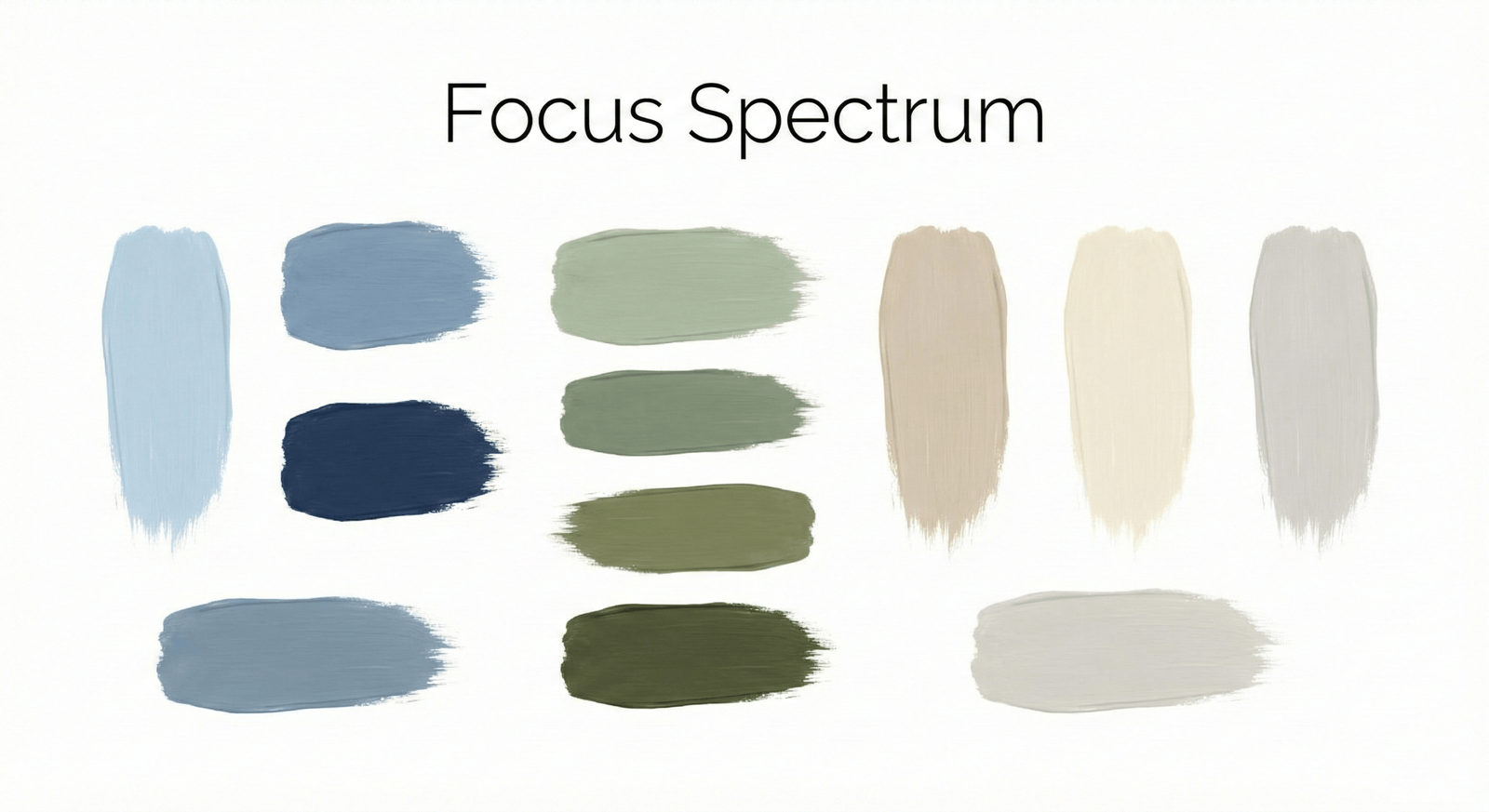
Color is not just aesthetic; it is a frequency. The colors you wear impact your cortisol levels and focus.
Red is often cited as a power color, but for exams, it can induce anxiety. It mimics danger signals biologically.
Instead, lean into the “Focus Spectrum.” Blue is universally recognized for promoting calm and concentration.
Green is another excellent choice. It reduces eye strain and signifies balance.
Neutrals (beige, camel, grey) are safe bets because they reduce visual clutter. They prevent you from overstimulating yourself in the mirror.
Footwear: The Foundation of Endurance
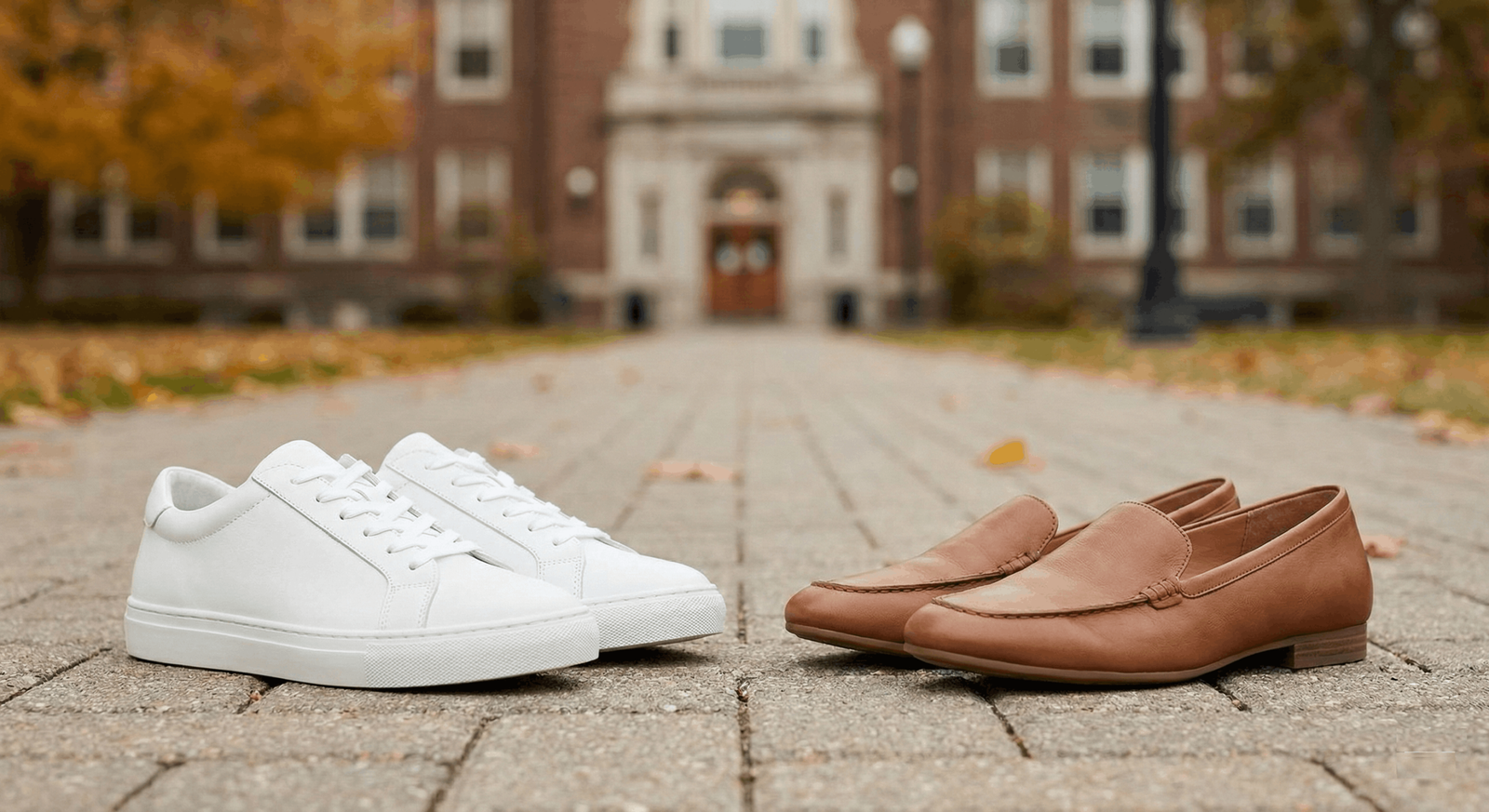
You could be taking the test, but you’re walking across campus to get there. Blisters are a huge pain.
During exam season, you shouldn’t wear high heels or stiff boots. You need support for your arch and space for your toes.
White leather sneakers that are clean are both stylish and modest. They go well with abayas and wide-leg pants.
Loafers look a little more like something you’d wear to school. Pick soft leather that doesn’t need to be broken in.
Do not experiment with new shoes on exam day. Wear the pair you trust implicitly.
- Sneakers: Opt for brands with memory foam insoles.
- Loafers: Look for rubber soles to prevent slipping.
- Boots: Ankle boots with low, block heels are acceptable.
- Socks: Wear moisture-wicking socks to keep feet dry.
- Backup: Keep blister plasters in your bag just in case.
Accessories: Functional Minimalism
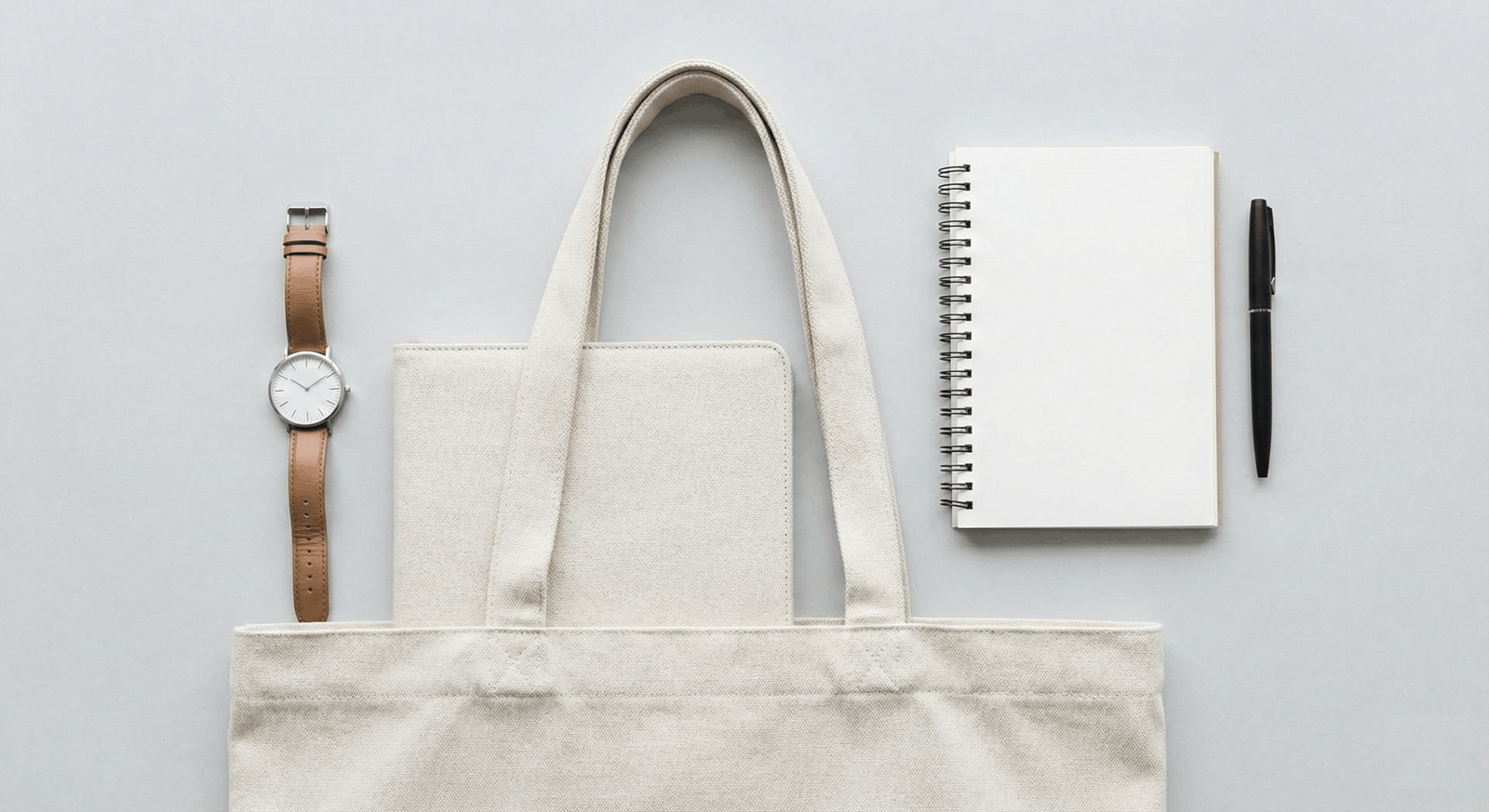
Jewelry should not clang against the desk. Noisy bangles are inconsiderate to other students and distracting to you.
Stick to stud earrings or a simple necklace. Keep your wrists clear for writing.
A watch is the only essential accessory. Analog watches help you pace yourself better than digital clocks.
Your bag is part of the outfit. It must be large enough to hold A4 notes without crumpling them.
A structured tote signals organization. Floppy bags make it hard to find your pens.
Dominate the Exam Hall
The test period is not just a test of intelligence; it is also a test of endurance. Your closet is a tool you can use.
By using “The ‘5-Minute’ Morning Routine: Modest Exam Season Outfits for Stressful Days,” you get rid of all the variables. You can handle the questions on the paper that you don’t know how to answer.
Dress for the grade you want. Wear the clothes that will help you feel better. Good luck; you are ready for this.