
Modest Shapewear Guide: The Invisible Architecture of the Abaya
A lot of people in the fashion world think that the “Modest Woman”—the woman who wears Hijab, lowers her gaze, and puts Haya (modesty) first—doesn’t care about how high fashion works. The industry thinks that we don’t care about the fit, shape, or construction of the clothes we wear because we cover up in public.
They are completely wrong.
The Muslim woman actually has to deal with a sartorial duality that is much more complicated than that of her secular peers. We live in two different worlds. The Public World is ruled by the divine command of the Jilbab and the loose outer garment. Our goal is to hide our shape, turn away from the gaze, and move with grace. Then there is the Private World, which is the home with one’s husband or the gender-segregated joy of the Walima (wedding feast) or the Mehndi, where the Abaya is lifted and beauty is celebrated within the limits of the Shariah.
In this second world, called the “Mahram Zone” or the “All-Female Sanctuary,” the Fashiorial woman often wears the most beautiful, detailed, and sometimes daring evening gowns. We wear a lot of beads. We wear clothes with complicated cuts. And in these safe, controlled places, we might wear shapes that need a lot of structural support.
But even in the Public World, underwear is very important. Putting a cloth over your body isn’t enough to be truly modest; you also need to make sure that the cloth fits properly. A skirt that sticks to the legs because of static or a bodice that bunches up in an unflattering way can ruin the modesty we want.
The Foundation is the “Exclusive” secret of the modest wardrobe.
This guide doesn’t tell you to change your body to fit in with a trend. It’s about how to layer things. It’s all about the “Desk-to-Dinner” engineering that makes sure you’re covered, comfortable, and confident, whether you’re giving a presentation in a boardroom or celebrating your sister’s wedding in a separate hall.
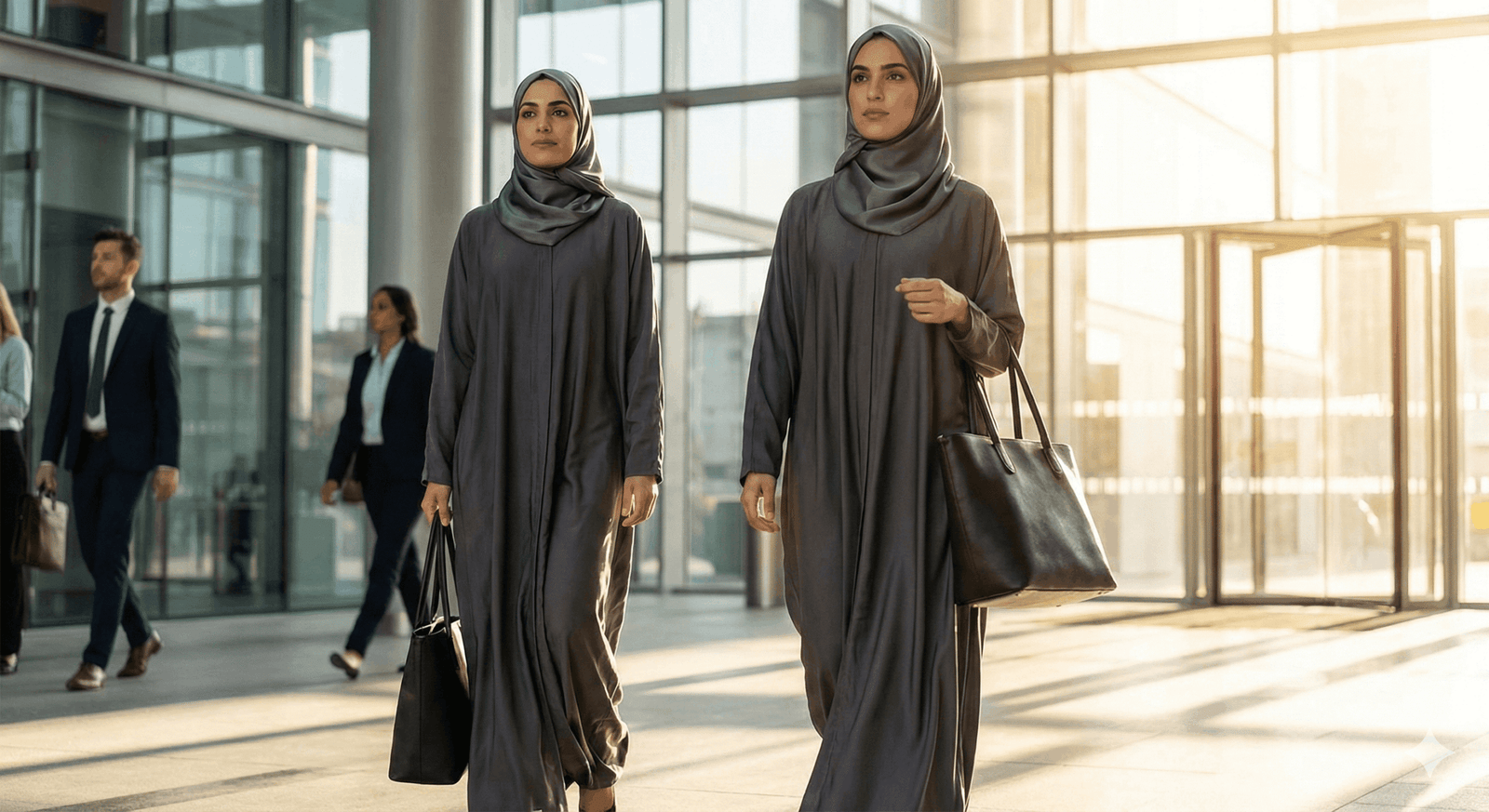
Part I: The Theology of the Silhouette (Why This Matters)
Before we discuss tape, wire, and Spandex, we must ground this discussion in our values. Why does a guide on “Shapewear” belong in a blog about “Pure Islamic Modesty”?
In Islam, beauty is not rejected; it is placed. Allah is Beautiful and He loves beauty. However, the exposure of the Awrah (nakedness/shape) is strictly regulated.
- The Anti-Cling Principle: In public, the Hijab conditions require clothing to be loose (fadfaad) and thick enough not to be transparent. However, “loose” fabric is susceptible to physics. Wind, static electricity, and movement can cause loose fabric to cling to the body, revealing the curves we intend to cover. Proper foundation garments (like high-quality slips and smoothing shorts) act as a barrier. They are the “Modesty Guard” that prevents the outer fabric from betraying the body’s shape.
- The Private Celebration: Islam encourages women to beautify themselves for their husbands. It also allows women to adorn themselves among other women. In these contexts, a woman might wear a gown that is structurally complex—perhaps a heavy velvet kaftan or a silk evening dress. These garments require internal support to look dignified and tailored.
Therefore, understanding “Shapewear 101” is not about vanity. It is about Adab (Etiquette). It is about ensuring your outer appearance remains dignified and that your “Hidden” beauty is supported comfortably.
Part II: The Public Sphere – Foundation for the Abaya and Modest Attire
Let’s start with the daily reality. You are wearing an Abaya, a Jilbab, or a modest tunic and trouser set. You are going to work, the market, or the mosque. What you wear underneath dictates your modesty level just as much as the outer layer.
The “Static” Enemy and the “Cling” Crisis
We have all been there. You are walking into a meeting, wearing a beautiful, flowing skirt. Suddenly, the fabric magnetizes to your legs, outlining every curve. You spend the next hour awkwardly pulling the fabric away from your skin. This is a failure of foundation, not intention.
The Solution: The Smoothing Short vs. The Compression Short
For the modest dresser, we are not looking for “Compression” (squeezing the body into a smaller size). We are looking for “Smoothing.”
- The Seamless Slip Short: This is non-negotiable. Unlike thongs or bikini briefs which create visible panty lines (VPL) that can show even through thick trousers, a mid-thigh slip short creates a unified, smooth surface.
- Fabric Choice: Look for a “Cool-Touch” nylon-spandex blend. Cotton creates friction (drag) against other cottons or linens, causing bunching. A sleek synthetic short allows the outer Abaya or skirt to glide over the body rather than catching on it.
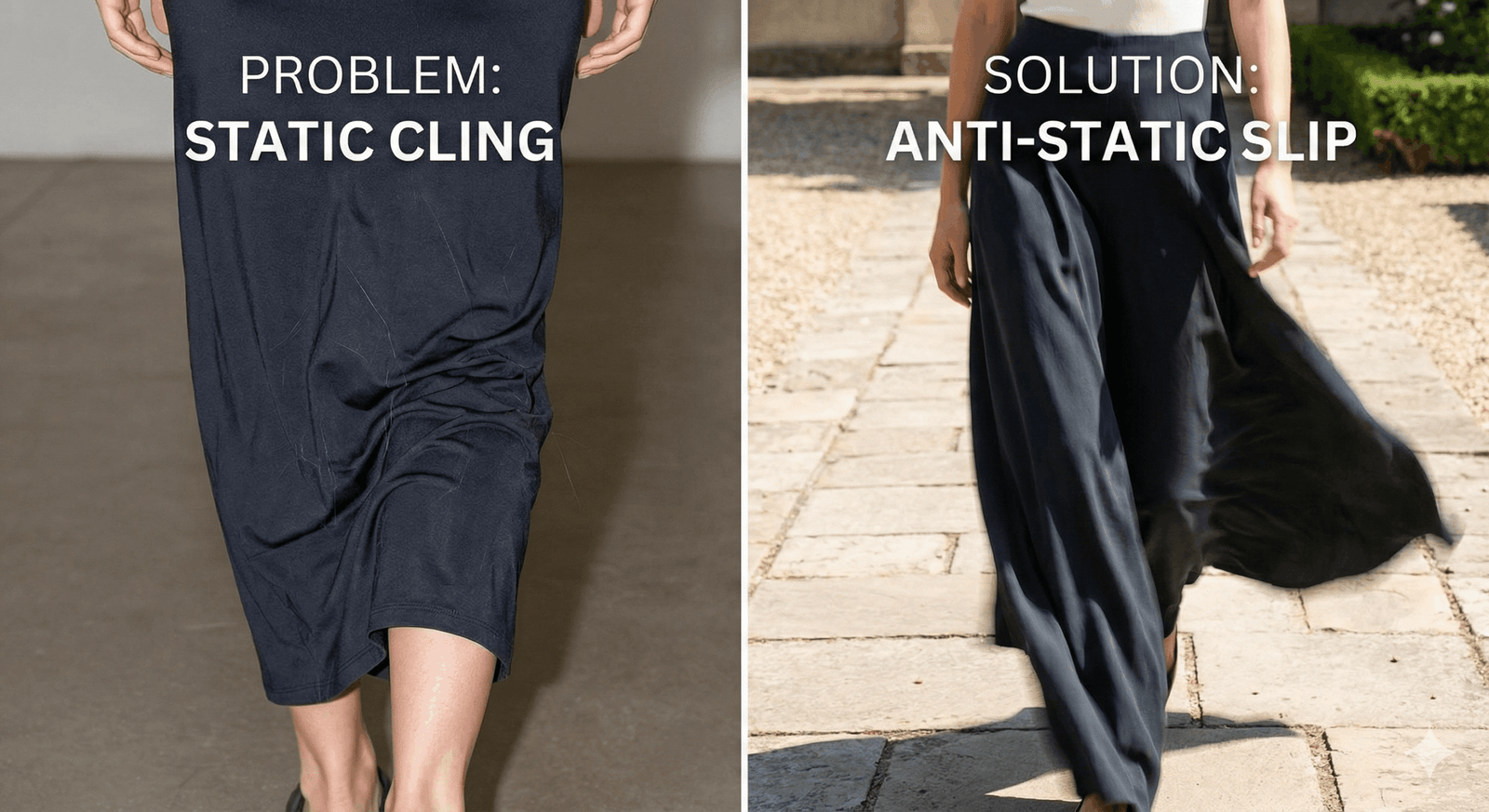
The “Abaya Slip” (The Unsung Hero)
Many women assume the Abaya is a standalone garment. It is not. It is an outer coat. Without a proper slip underneath, you risk transparency in sunlight (the “X-Ray Effect”).
- The Full-Length Slip: Every modest wardrobe needs a collection of simple, straight-cut slips in nude, black, and white.
- The “Backless” Dilemma in Public: Sometimes, we buy a “Modest” dress that has a yoke that is slightly sheer, or a back zipper that irritates the skin. A high-back, full-coverage slip solves this. It acts as a lining that the manufacturer forgot to include.
Fashiorial Tip: If you are wearing a jersey or knit Abaya (which is prone to clinging), wear a slip made of a stiff fabric like cotton poplin underneath. The stiffness of the under-layer will force the soft outer layer to hang away from the body, preserving your modest silhouette.
Part III: The Private Sphere – The Segregated Wedding & The “Mahram” Zone
Now, we shift gears. We are entering the Walima hall. The doors are closed. It is ladies-only. You remove your Abaya and Niqab to reveal the gown you have saved for this occasion.
Often, in the Middle East and South Asia (Pakistan/India), the fashion for these segregated events mirrors high-end Western couture. We see heavy embellishments, intricate necklines, and yes, sometimes “plunging” or “backless” designs (among women).
Even if your dress is fully modest (high neck, long sleeve), the sheer weight of a formal beaded gown requires “Heavy Lifting” engineering.
This is where we decode the keywords: “Bra for backless dress” and “Shapewear for evening gowns.”
Scenario A: The Illusion Back / The Delicate Lace Gown
Use Case: An all-female party where you are wearing a gown with lace detailing on the shoulders or back.
You cannot wear your everyday beige T-shirt bra here. The straps will show through the lace, ruining the elegance of the look.
The Solution: The Low-Back Converter & Adhesive Tech
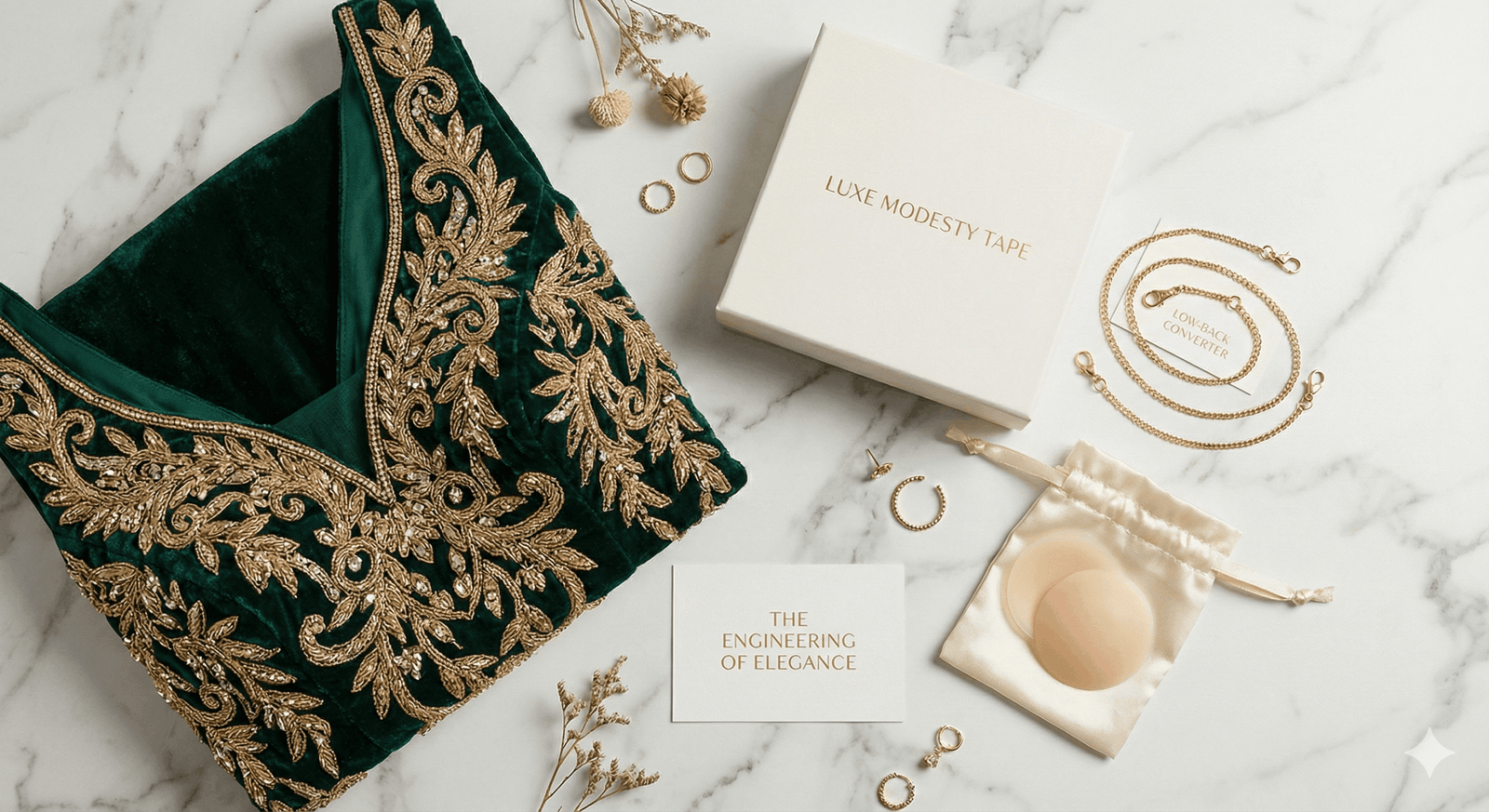
- The Low-Back Converter: This is a simple strap extension that hooks onto your existing bra and wraps around your waist, pulling the back band down by 2-3 inches.
- Modesty Note: This is excellent for dresses that are high-necked but have a lower zipper or a button closure that might gap open slightly. It ensures that if the fabric moves, your undergarments aren’t flashing the room.
- The “Sticky” Bra (Silicon Adhesives):
- The Myth: “They don’t work for larger chests.”
- The Reality: They work if you buy the right kind. For a heavy bust, you don’t need the two separate cups (which offer no lift). You need the “Winged” Adhesive Bra. This adheres to the side of the rib cage, using tension to pull the breast tissue inward and upward.
- Application Protocol: You must apply these to completely dry, oil-free skin. No lotions, no oils. Wipe the skin with rubbing alcohol first. This ensures the medical-grade adhesive creates a bond that lasts through 4 hours of sweating at a wedding.
Scenario B: The “Plunging” Neckline (Modified)
Use Case: You bought a designer gown that has a deep V-neck, and you are wearing a high-neck bodysuit underneath to make it modest, but you need structure for the chest.
This is a common “Hack” in modest fashion. We buy a V-neck dress and wear a mock-neck top underneath. But wearing a bra under the mock-neck under the dress creates three layers of straps. It looks bulky and lumpy.
The Solution: Plunge Shapewear or “Boob Tape”
- Boob Tape (Kinesiology Tape): This is the billion-dollar secret of the red carpet, now available for the modest woman’s toolkit.
- Why use it? It allows you to create custom support without a band digging into your back.
- The Technique: For a modest look where you just need lift and security under a heavy gown, use the “Vertical Lift” method. Apply a strip from the base of the breast up towards the collarbone (stopping before the neck, obviously).
- Removal Safety: Never rip this tape off dry. You must soak the tape in baby oil or olive oil for 15 minutes before peeling. The skin on the chest is fragile; ripping it can cause tears.
- The Plunge Bodysuit: If you are layering a high-neck shirt under a V-neck dress, wear a sculpting bodysuit as your base layer. This acts as your bra, your tummy smoothing, and your “modesty filler” all in one. It eliminates the bulk of a separate bra.
Scenario C: The Heavy Beaded Kaftan
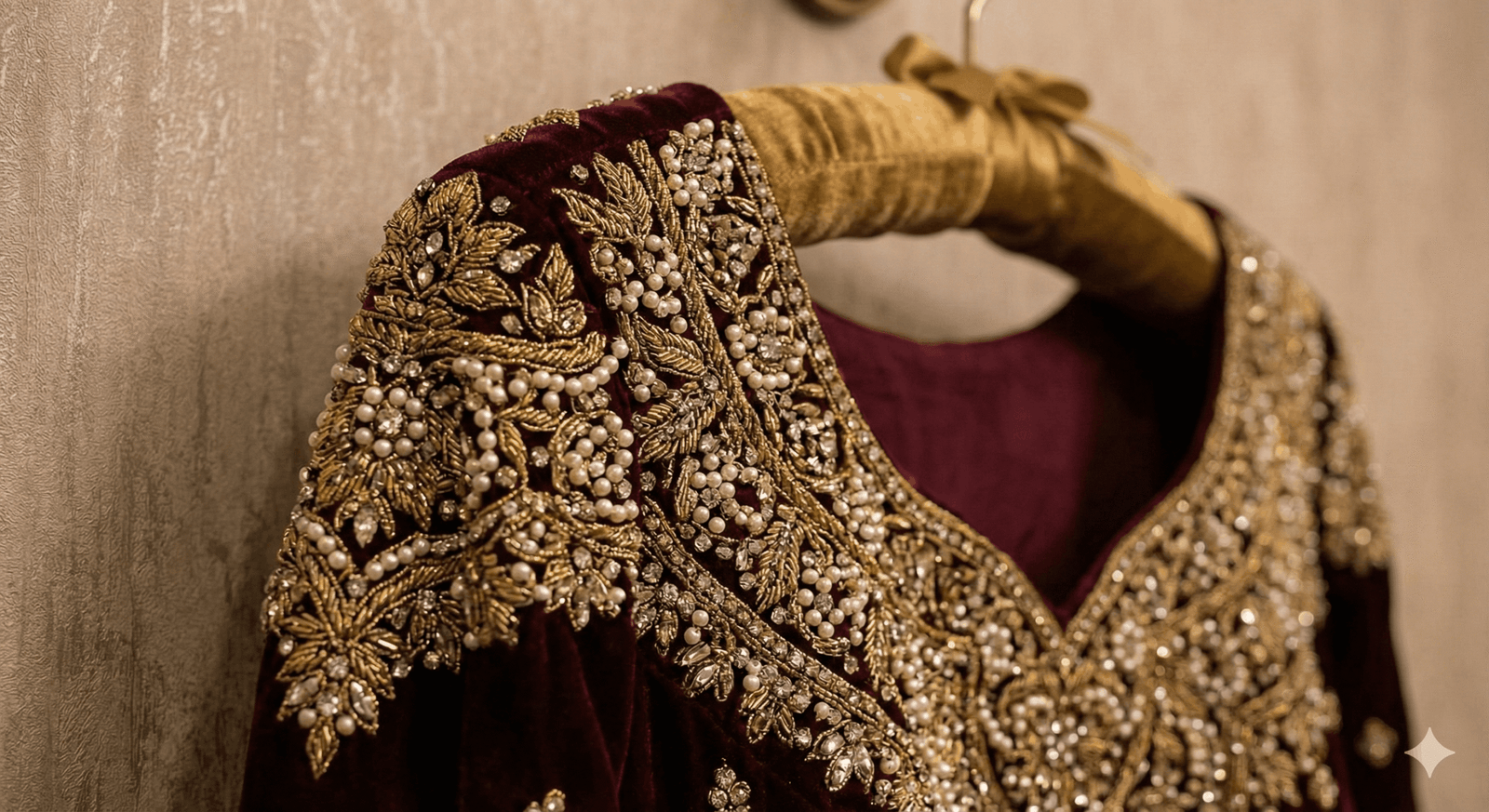
Use Case: A Pakistani bridal or formal guest outfit. These weigh 5kg+ due to beadwork.
A standard bra will collapse under the weight of a heavy velvet or chiffon embellished shirt. The wire will dig into your ribs.
The Solution: The Longline Corset Bra
You need “Architecture.” A longline bra extends down to the waist.
- Support: It distributes the weight of the chest across the entire torso, not just the shoulders.
- Posture: Heavy gowns can make you slump. A longline corset forces you to sit up straight, which instantly makes the outfit look more expensive.
- The Smooth Line: It eliminates the “back fat” roll that can happen where a normal bra band cuts into the skin. This ensures that the back of your Kameez or Gown falls perfectly smooth.
Part IV: The Mechanics of Fabric (The Physics of Modesty)
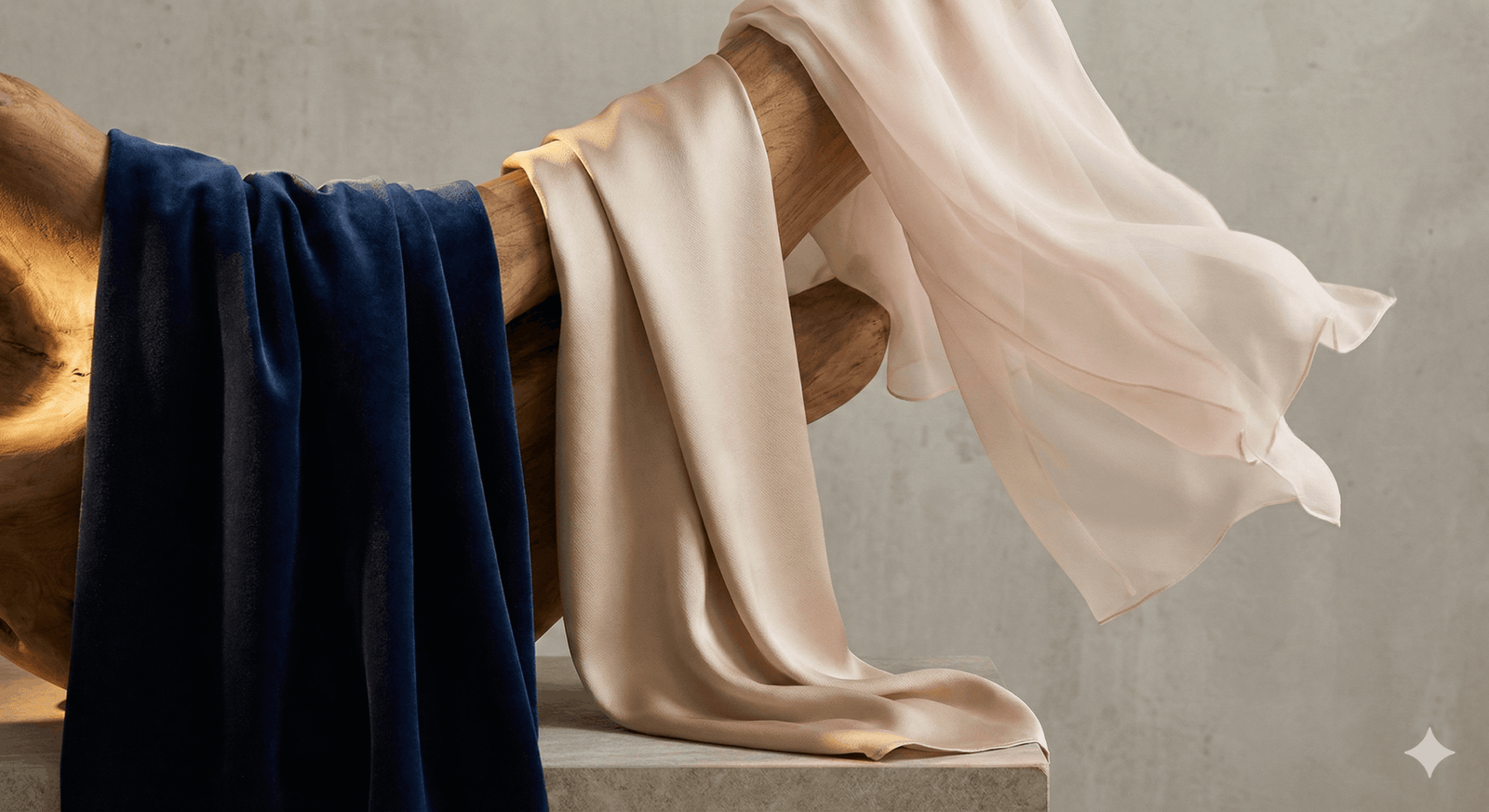
To truly master the art of the modest wardrobe, you must understand how different fabrics interact with your body and your undergarments. This is “Material Science 101.”
1. Velvet
- The Risk: Velvet is heavy and warm. It traps heat.
- The Undergarment: You need moisture-wicking shapewear. Do not wear cotton underneath velvet; you will overheat and sweat, and the sweat will seep through, ruining the velvet pile.
- Recommendation: A lightweight, athletic-mesh bodysuit. It provides separation between your skin and the heavy fabric.
2. Silk / Satin / Charmeuse
- The Risk: These are the “Tattle-Tale” fabrics. They show everything. A lace bra texture will look like a topographical map through silk.
- The Undergarment: Seamless, laser-cut microfiber.
- The Golden Rule: Your shapewear must be looser than you think. If your shapewear cuts into your thigh, the silk will catch on that ridge. You want “Invisible Edges.”
3. Chiffon (The Layered Look)
- The Risk: Static cling. Chiffon generates electricity when it rubs against polyester slips.
- The Fix:
- The Anti-Static Spray: Keep a small bottle in your purse.
- The “Lotion” Trick: If you are caught without a slip, apply lotion to your legs. The moisture reduces the static charge, preventing the chiffon from wrapping around your ankles.
- The Weighted Hem: A true Fashiorial hack—take your tailor a small heavy coin or a lead curtain weight and have them sew it into the inside hem of your chiffon Abaya or dress. This uses gravity to pull the fabric away from your body, ensuring modesty even in the wind.
Part V: The Medical & Comfort Reality (Health First)
We cannot talk about shapewear without talking about health. As Muslim women, our bodies are an Amanah (trust) from Allah. Damaging them for the sake of a silhouette is forbidden.
The “Squeeze” Danger
If your shapewear makes it hard to breathe, hard to eat, or causes numbness, take it off immediately.
- Organs: Excessive compression can compress the stomach, leading to acid reflux.
- Nerves: Tight “Spanx-style” shorts can compress the femoral cutaneous nerve in the thigh, leading to a condition called Meralgia paresthetica (numbness/tingling in the legs).
The Correct Fit Check:
- You should be able to slide two fingers comfortably under the waistband.
- There should be no “rolling down” at the waist. Rolling means it is too tight or the rise is too short for your torso.
- You should be able to sit on the floor (as we often do in prayer or gatherings) without the garment cutting into your waist.
Practicality: The Wudu Factor
This is the logistical nightmare no fashion magazine talks about. How do you go to the bathroom or make Wudu (ablution) in a full-body shaper?
- The “Open Gusset”: Look for shapewear that has an opening (gusset) at the bottom. This is essential for long wedding events where you will need to use the restroom without undressing completely.
- Two-Piece vs. One-Piece: For maximum Wudu ease, separate high-waisted shorts and a camisole are better than a full bodysuit. It allows you to adjust easier.
Part VI: The “Tape Guide” – A Technical Manual
For those rare occasions in the private sphere where you need tape (e.g., a boat-neck gown where straps keep slipping), here is the safety manual.
Types of Tape:
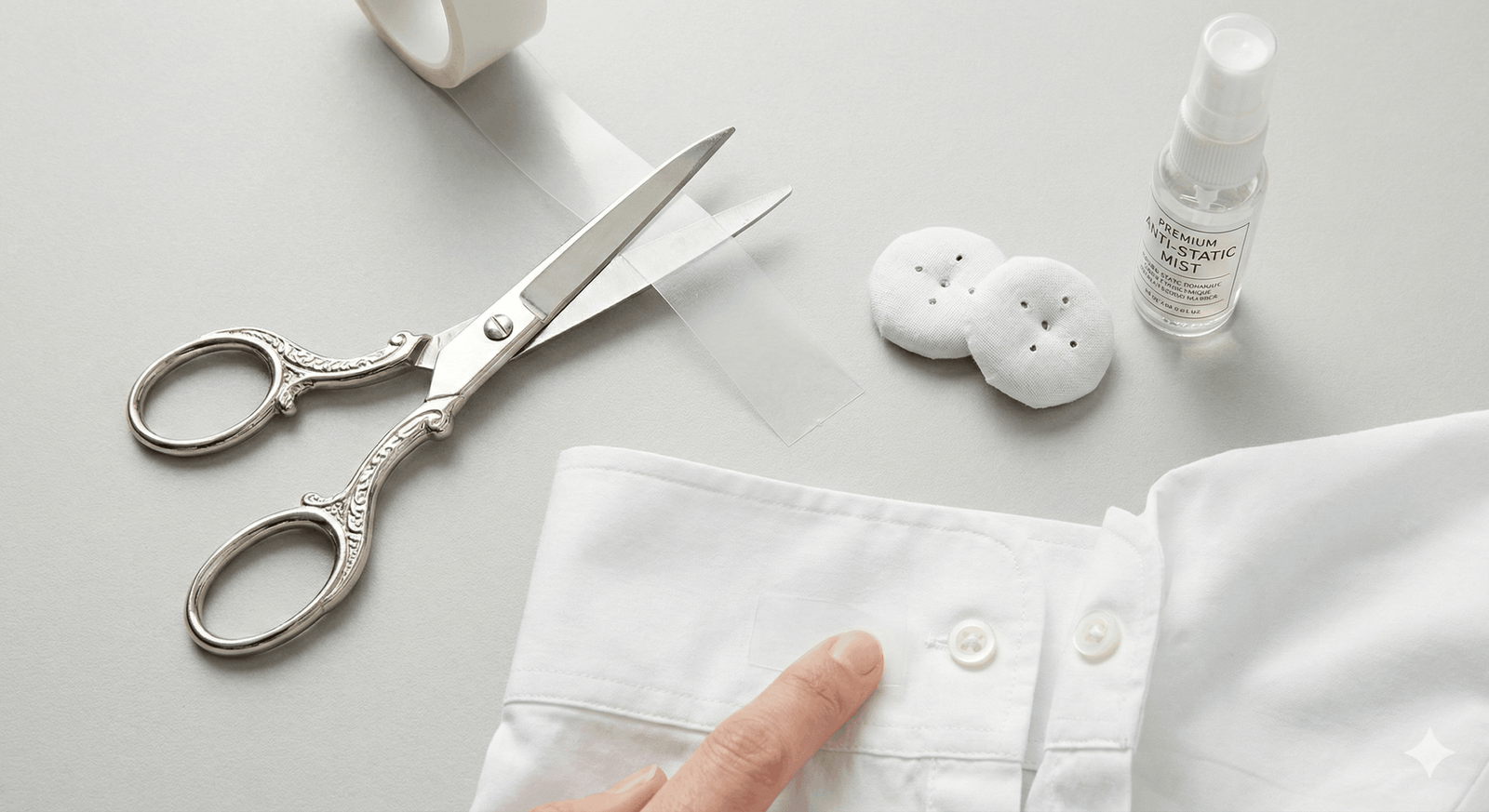
- Fashion Tape (Double Sided): This is for fabric-to-skin adhesion. Use this to keep a Hijab secure on the forehead without pins, or to keep a cuff from sliding up your arm.
- Body Tape (Single Sided – Gaffer style): This is for lift. It stretches.
- Silicone Nipple Covers: These are essential for modesty even under bras, to prevent any protrusion through thin fabrics.
The “Sensitive Skin” Patch Test: Before the big event (the wedding or the party), apply a small piece of the tape to your inner arm and leave it for 4 hours. If it turns red or itches, do not put it on your chest. You may have an allergy to the adhesive (latex or acrylate).
Part VII: Buying Guide – The Investment Strategy
A modest woman does not need a drawer full of cheap lingerie. You need a “Capsule Collection” of high-performance engineering.
The “Must-Have” List for the Fashiorial Woman:
- The “Iron-Clad” Nude Bodysuit:
- Color: Must match your skin tone perfectly.
- Style: Tank top straps (wide enough to hide bra straps if worn underneath).
- Purpose: The base layer for every sheer blouse or white shirt.
- The “Anti-Chafe” Shorts (Black & Nude):
- Length: Mid-thigh.
- Purpose: To wear under every Abaya and maxi skirt to prevent static and chafing.
- The “Convertible” Multi-way Bra:
- Features: Detachable straps.
- Purpose: Flexibility for different necklines at all-female parties.
- The Full-Length Cotton Slip:
- Purpose: Breathability under polyester Abayas in the summer heat.
Cost vs. Value: Cheap shapewear rolls. It loses elasticity after two washes. High-end shapewear (brands like Spanx, Skims, or specifically modest brands like Modanisa’s internal lines) uses “bonded seams” which lie flat. Spend the money here. It is better to have one $80 shaper that lasts 5 years than ten $10 ones that ruin your silhouette.
Part VIII: Troubleshooting Real Life Scenarios
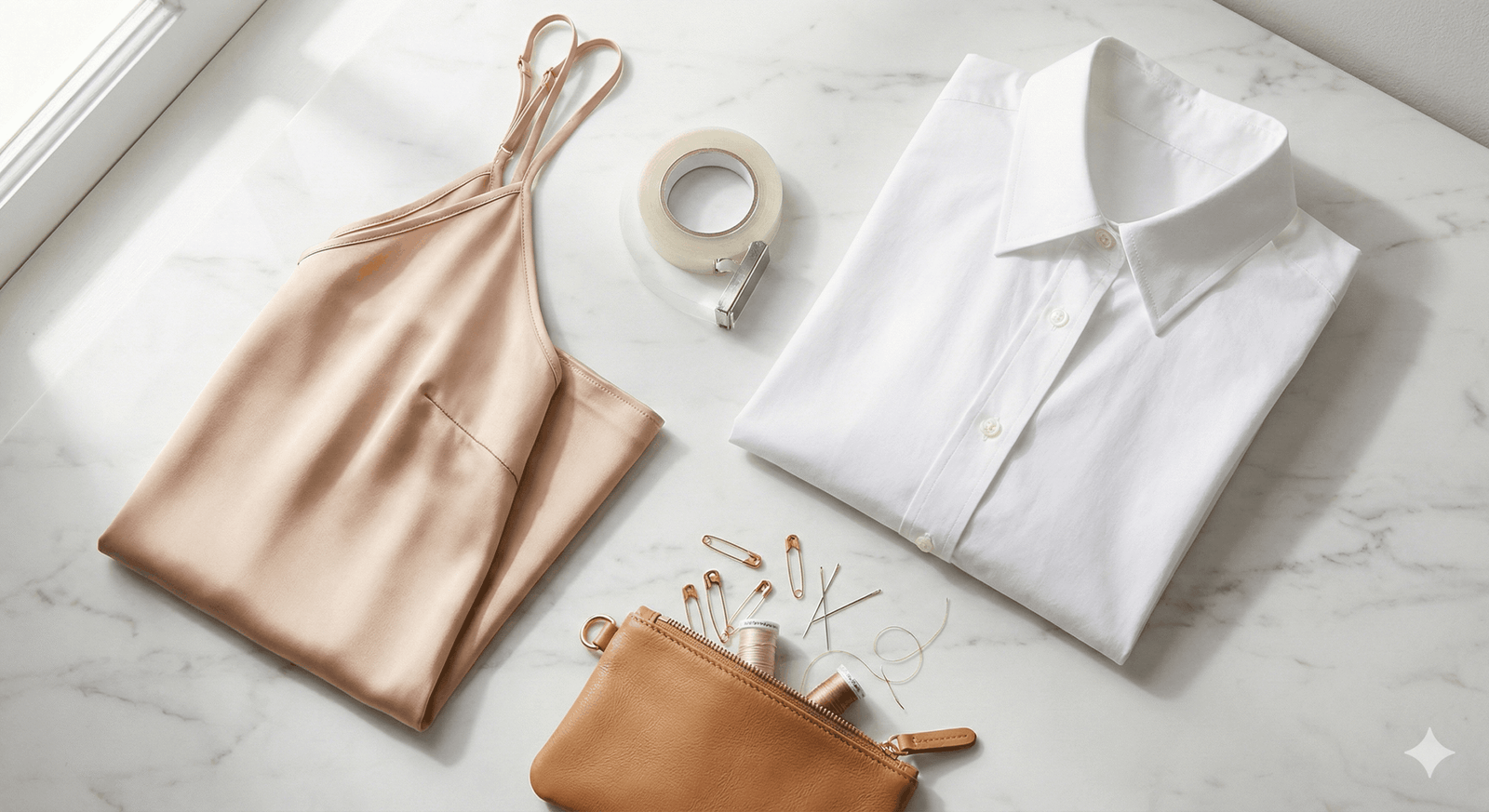
Scenario: The Wedding Guest Emergency Problem: You are at a segregated wedding. You are wearing a gown. The wire in your bra snaps and is poking you. The Exclusive Fix: Go to the bathroom. Use a panty liner (sanitary pad). Cut a small piece and stick it over the sharp wire. The padding will protect your skin for the rest of the night.
Scenario: The “Gaping” Button Down Problem: You are at work. Your shirt fits everywhere but gaps at the bust. The Exclusive Fix: Fashion tape between the buttons. But the real fix is wearing a “Minimizer Bra.” This bra style redistributes breast tissue to the sides rather than forward, reducing the bust projection by 1-2 inches, allowing the shirt to close modestly without strain.
Scenario: The “See-Through” White Skirt Problem: You bought a white maxi skirt. It looked opaque in the store. In the sun, it is transparent. The Exclusive Fix: Nude shorts are not enough. You need a “Weighted Lining.” Wear a nude slip, but ensure the slip is shorter than the skirt by 2 inches. If the slip is the same length, it looks bulky.
Confidence from the Inside Out
Fashiorial’s philosophy, and the philosophy of the modest woman, is that our dignity comes from inside us. But that inner dignity needs to be backed up by care from the outside.
When we talk about the “Desk-to-Dinner” test, we don’t just mean the dress. We also mean how comfortable you feel in your own skin. Your clothes should never be a distraction when you walk into a room, whether it’s a corporate office full of men where you want to be judged on your intelligence or a wedding hall full of women where you want to celebrate beauty.
Bad underwear can be distracting. They make you move around. They make you pull on your hem. You have to look in the mirror all the time.
Good underwear, like the right shapewear, the right bra, and the anti-static slip, makes you look like you don’t have any. You can forget about your body when you wear them. When you forget about your body, your mind is free to focus on your work, your worship, and your relationships.
That is the main goal of the simple wardrobe: To cover the body so perfectly that the soul can shine all the time.
Don’t be afraid of the “Backless” aisle or the “Shapewear” section. Figure them out. Use the tools that help you be modest. Put as much thought into your clothes as you do into your job and your faith.
Because true modesty is perfect.