
What to Wear to a University Presentation (That Isn’t a Boring Black Suit): The Ultimate Guide
You have spent weeks working on your slides, doing research, practicing, and making them better. Your content is great, but your confidence is hiding in your closet. The old advice says to wear a stiff, ill-fitting suit, but that seems out of date and fake.
You need clothes that make people respect you without hiding who you are. The secret to feeling good and getting the audience involved at a university presentation is knowing what to wear that isn’t a boring black suit. It’s time to stop looking like a corporate drone.
This guide fills the gap between high-fashion expression and serious study. We are changing the rules about what to wear.
The Psychology of Style: Why the “Safe Choice” Fails You

Most students default to black because it feels safe. However, safety often reads as invisibility. When you are presenting, you want to be memorable, not just present.
[According to a study published by Northwestern University on “Enclothed Cognition,” the clothes you wear systematically influence your own psychological processes.]
If you feel restricted and drab in a stiff suit, your delivery will reflect that rigidity. You need “Power Casual.” This is the intersection where comfort meets authority.
The 3 Pillars of Presentation Style
- Fabric Quality: Cheap polyester shines under fluorescent lights; opt for matte wools, cotton blends, or structured knits.
- Fit over Brand: A thrifted blazer that fits perfectly looks more expensive than a designer jacket that bunches at the shoulders.
- Color Theory: Deep blues convey trust, muted reds signal energy, and neutrals provide a blank canvas for your ideas.
Your goal is to eliminate distractions. If you are tugging at a skirt or adjusting a tight collar, the audience stops listening to your words and starts watching your discomfort.
What to Wear to a University Presentation (That Isn’t a Boring Black Suit): 5 Winning Formulas
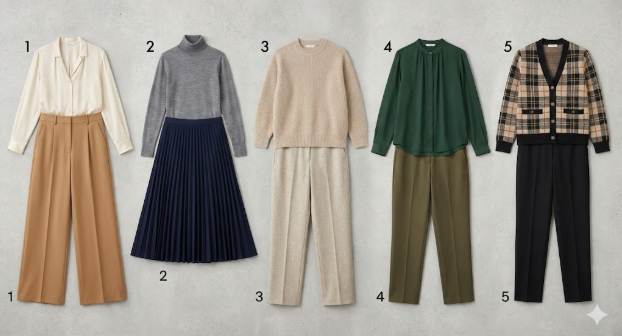
The “Elevated Separates” method is the best way to dress for a university presentation. It involves wearing tailored trousers or a midi skirt in neutral or jewel tones with a structured third piece, like a blazer or cardigan. This gives you a polished look that makes you feel more confident and in charge without having to wear old-fashioned suits.
Formula 1: The “Power Separate” (Wide-Leg Trousers + Silk Blouse)
In the business world, skinny pants are no longer cool. Wide-leg pants make a strong, architectural shape. They give you movement and presence as you walk across the stage.
Wear high-waisted pants in camel, navy, or charcoal with a silk or satin blouse with a high neck. The difference in texture is very important here. The way the silk flows makes the pants less harsh.
- Why it works: It mimics the lines of a suit but offers 100% more comfort.
- Footwear: Block heel boots or pointed-toe flats.
- Accessory: A thin leather belt to define the waist.
Formula 2: The “Academic Chic” (Midi Skirt + Turtleneck)
If you prefer femininity without the risk of a short hemline, the midi skirt is your best friend. Choose a pleated or A-line cut that sits below the knee.
Tuck a fitted, fine-gauge turtleneck into the skirt. This look screams “intellectual competence.” It draws the eye up to your face, ensuring the audience focuses on your speech.
Pro Tip: Avoid loud prints. You want the audience analyzing your data, not your skirt pattern.
If you are looking for specific pieces to build this look, [LINK: check out our curated list of modest midi skirts for professionals].
Formula 3: The “Modern Monochromatic”
Wearing one color from head to toe is a stylist’s cheat code for looking expensive. You don’t need a suit to match.
Try different shades of the same color family. Pair a beige knit sweater with oatmeal wool trousers. Or try a forest green blouse with olive pants.
- The Benefit: It creates a long, unbroken vertical line, making you appear taller and more commanding.
- The Texture: Mix heavy fabrics with light ones to keep it interesting.
- The Vibe: Effortless sophistication that looks intentional.
The “Third Piece” Rule: Outerwear That Defines You
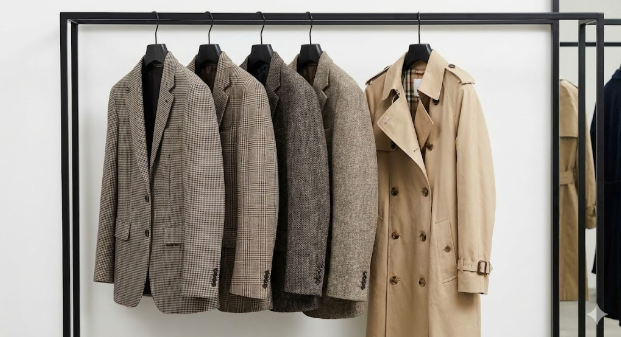
The “Third Piece” is the item that transforms a simple top and bottom into an “outfit.” Usually, this is a blazer, a vest, or a structured cardigan.
The Oversized Blazer
Forget the fitted, cropped jackets of the early 2000s. The modern blazer is slightly oversized and relaxed. It says you mean business, but you aren’t trying too hard.
Roll the sleeves up slightly to expose your wrists. This creates a sense of action and readiness. Look for textures like houndstooth, plaid, or bouclé to add visual weight.
For a deep dive on finding the right fit, read our guide on [LINK: how to choose a blazer for your body type].
The Structured Cardigan (Lady Jacket)
If a blazer feels too “corporate” for your art history presentation, opt for a structured cardigan. These are heavy knits with gold buttons or distinct collars.
They provide the warmth of a sweater with the silhouette of a jacket. It strikes a balance between approachable and authoritative. This is perfect for smaller seminar groups where a suit would feel aggressive.
Footwear: Grounding Your Presentation
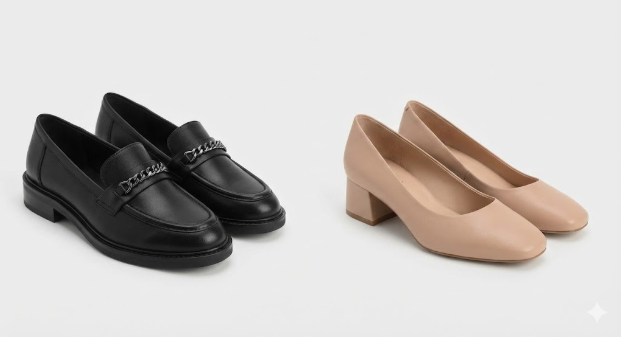
You cannot deliver a powerful presentation if your feet are screaming in pain. Stilettos are a liability on a university stage.
The Loafer
The chunky loafer is the ultimate power move. It is practical, trendy, and incredibly stable. You can pace the stage with zero fear of tripping.
Look for leather or faux-leather with a bit of hardware (a horsebit or chain). This adds a touch of polish to the bottom half of your outfit.
The Block Heel
If you feel more confident with some height, stick to a block heel. It distributes your weight evenly.
Aim for a height of 2-3 inches max. Any higher and you risk wobbling. Nude tones elongate the leg, while black grounds the outfit.
- Avoid: Open-toed sandals (too casual).
- Avoid: Dirty sneakers (disrespectful).
- Avoid: Brand new shoes you haven’t broken in (blister city).
Accessories: The Fine Line Between “Bland” and “Distracting”

Accessories are where you inject your personality. However, they must be silent.
The “No-Jingle” Rule
Avoid stacks of bangles that clack together when you move your hands. Your microphone will pick up that sound. It will drive your professor insane.
Statement Earrings vs. Necklaces
Choose one focal point. If you wear bold earrings, skip the necklace. If you wear a chunky necklace, go for stud earrings.
A classic watch is also a fantastic psychological signal. It subtly tells the audience that you value time.
The “Zoom” Factor: Dressing for Virtual Presentations

Many university presentations still happen online. The rules change when you are a floating head in a box.
Focus on the Neckline
Your waist-down outfit doesn’t matter, but your neckline is critical. V-necks extend the neck, while collars frame the face.
Avoid strapless tops or tube tops. On camera, they can make you look naked. That is a distraction you definitely do not need.
Color and Lighting
Webcams wash you out. Wear a color slightly brighter than you would in person. Royal blue, emerald green, or magenta pop on screen.
Avoid fine patterns like pinstripes or herringbone. They cause a “moiré effect” where the camera buzzes and strobes. Stick to solids.
The Mirror Check Protocol
Before you leave your dorm or apartment, run this final checklist. Confidence comes from knowing nothing can go wrong.
- The Sit Test: Sit down in a chair. Does your skirt ride up too high? Do your trousers cut into your stomach?
- The Reach Test: Reach up as if pointing to a slide. Does your shirt untuck? Does your midriff show?
- The Opacity Test: Stand in bright light. Is your skirt see-through? (Leggings are not pants, and thin linen needs a slip).
Your outfit is the armor you wear to battle. When you nail the aesthetic, you stop worrying about your appearance and start focusing on your message.